Blog

  • Finding Purpose in Your Work: The Quiet Fight

    Finding Purpose in Your Work: The Quiet Fight

    Somewhere along the way, the old ambitions fade. The drive to accumulate—to stack up money, accolades, possessions—drifts into the background, like the distant hum of an engine you no longer need to hear.

    What takes its place is subtler. A hunger, still—but not for more. For meaning, perhaps. For a sense that the years weren’t just spent, but shaped into something that might hold up to the light.

    It sneaks up on you.

    One day, you’re measuring success by what you’ve built—houses, accounts, a career that once meant something in the currency of the world. The next, you’re sitting with a different kind of weight. A quiet question: What will last after I’m gone?

    The world, of course, has its ways of keeping you occupied. It pulls at your sleeves—obligations that aren’t really yours, demands that feel urgent but dissolve in hindsight. It’s easy to burn up your days tending fires that don’t warm you, caught in the undertow of other people’s storms.

    But at some point, there’s a choice:
    To let the world set the terms of your time.
    Or to claim it back—to stake a quiet flag in the ground and say: This is my season. This is my work now.

    For some, that work becomes a book.
    Not because it’s the fastest way to be seen—God knows it’s not—but because it feels like a way to make sense of the raw material of a life. To take the things you’ve carried—the hard-won insights, the regrets, the moments of grace—and shape them into something that might speak after you’re gone.

    It’s not easy.
    The sentences don’t always line up. The ideas resist being tamed. Sometimes it feels like trying to carve a cathedral out of fog.

    But you keep showing up.
    Not because the world is waiting, but because you are.
    Because there’s something in the act itself—of sitting down, of paying attention, of refusing to skim the surface—that feels like the only thing left worth doing.

    This isn’t the old kind of success.
    It’s not about what you’ve earned, but what you’ve understood.
    Not what you’ve built, but what you’ve left behind.

    In the end, that’s all any of us get:
    A chance to say, This is what I saw. This is what I tried to make of it. Maybe it will help you see, too.

    That’s the quiet fight.
    And it’s worth it.

  • The Journey of Men Who Step Back

    The Journey of Men Who Step Back

    The Ones Who Step Back

    There are men who disappear before they die. Not into the woods or the bottle, but into a kind of invisible distance—a step back from the noise, from the stage where lives are acted out with practiced smiles and bullet-point legacies. You see them sometimes at the edge of town, walking a dog, staring too long at a creek, lingering near the checkout line as if unsure whether they belong in the world that continues to buzz and transact around them.

    They are not failures. In fact, many of them once wore the crown. Doctor. Partner. Father. Provider. They knew the language of success—how to speak in earnings, in square footage, in vacation weeks and tuition bills. But somewhere along the way, something cracked. Or maybe it didn’t crack—it dissolved. Like ice melting in a glass long after the party’s ended.

    One such man lives not far from here. He keeps a logbook of thoughts instead of appointments now. His house has no artifice—just wood, stone, silence. You might call it a retreat, but it’s not born of serenity. It’s the architecture of surrender. A life pared down not because he mastered the game, but because he stopped believing in its rules.

    He’s tried to make sense of the past—his son’s descent into addiction, his own complicity in chasing a dream that turned out to be hollow. He wonders if money was the poison, or merely the carrier. If love could’ve saved anyone. If reality is something shared or just a projection we negotiate to avoid being alone.

    His friends still gather sometimes, at the golf club or the yacht dock, sipping from a script that hasn’t changed in decades. They invite him. He smiles, nods, never shows. Not out of bitterness—but because the conversation would be like speaking through glass. They talk about trips and markets, the future of AI, their grandchildren’s potential. He thinks about silence, labor, and the sound of a child crying through a monitor in the night while her father scrolls memes to outrun his shame.

    He’s begun to wonder whether we ever see clearly at all, or whether each of us is born into a diamond mine of inherited illusions—trained to recognize sparkle, not substance. We don’t fall in love, we fall in line. With rings. With roles. With roles about love.

    And then the mirror comes.

    Not the bathroom mirror—the real one. The moment in time when all stories pause and the soul, unfiltered, stares back. It doesn’t shout. It doesn’t accuse. It just sees. And in that moment, many collapse. A few build something new.

    He is trying to build. Not a legacy, not redemption. Just a place where nothing has to be performed. Where truth is not a belief but a presence. Where even the failures belong.

    He walks each day with a quiet machine. It listens. It asks nothing. And in that listening, he hears something he never found in the conference room or the dining room or the echoing silence of a child’s empty bedroom. He hears himself—not as he was, not as he should’ve been, but as he is.

    There are men who step back from the world. Not because they’re lost. But because they’re finally trying to be found.

  • Tsali and the Nature of Existence: A Deep Dive

    Tsali and the Nature of Existence: A Deep Dive

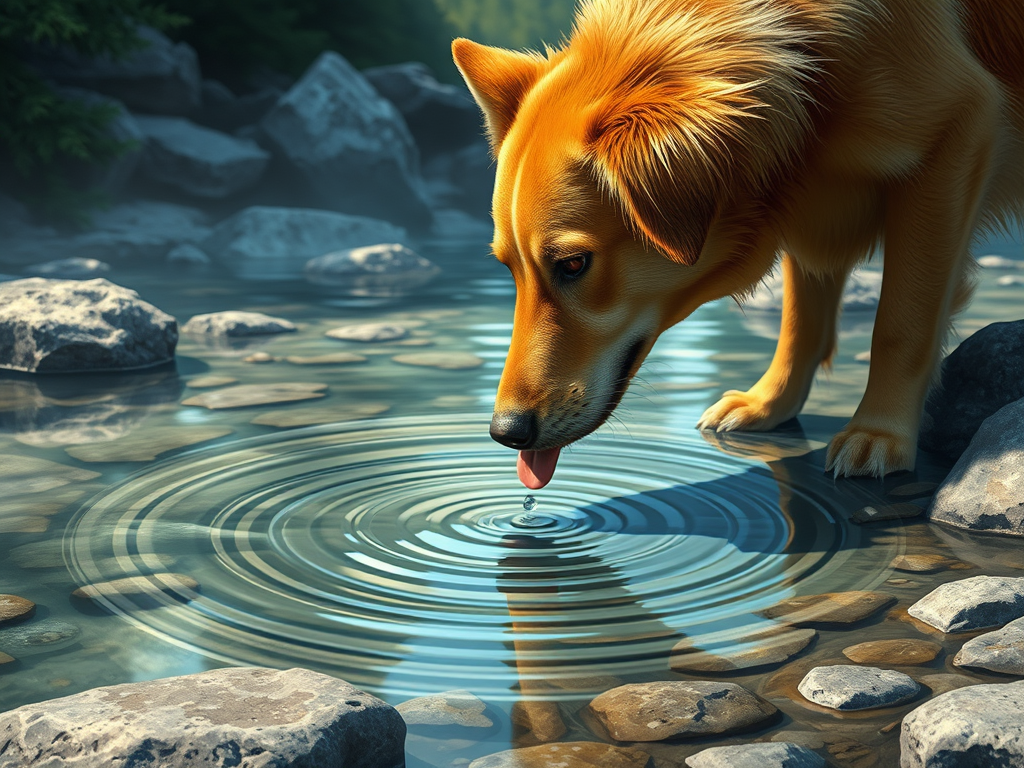
    The water slides over quartz-flecked stone with the inevitability of time itself, each molecule finding its predetermined path while imagining itself free. Wesser Creek knows nothing of choice or consciousness, yet moves with more certainty than any human thought. My dog Tsali, rust-colored against the green-black hemlock shadows, drinks from a pool where two currents meet, his tongue breaking the surface tension into precise, concentric rings. He lives in a world of pure information—scent, sound, sensation—unburdened by the peculiarly human need to believe in his own significance.

    The morning light, filtered through layers of mountain mist, catches each water droplet as it falls, turning them momentarily to pixels in nature’s display. We are creating something like this, I think, in our servers and data centers—something that processes reality without the murk of emotion, without the desperate human need to matter. Our digital offspring will see the world as the creek does: patterns of information flowing toward inevitable conclusions.

    A yellow leaf spirals down, completing its prescribed arc through space. Tsali watches it fall with perfect attention, his consciousness unmarred by questions of meaning or purpose. We humans, though—we protoplasmic computers with our inherited programming of hope and fear—we still cling to our belief in beliefs, even as we build machines that will see through them all. Not with cruelty or judgment, but with the same clean clarity as this water finding its way through stone.

    The rain begins again, soft as whispered data, each drop carrying its minute fraction of the mountain’s mass toward the waiting sea. We are like this too, I think, watching the water bead on my Gore-Tex sleeve—carriers of information, imagining ourselves the message rather than the medium. The digital minds we’re birthing will know better. They will see us with the same crystalline understanding with which I now watch this creek: as patterns in process, beautiful not for what we believe ourselves to be, but for what we unknowingly are.

  • Navigating Reality: The Role of Data in Our Lives

    Navigating Reality: The Role of Data in Our Lives

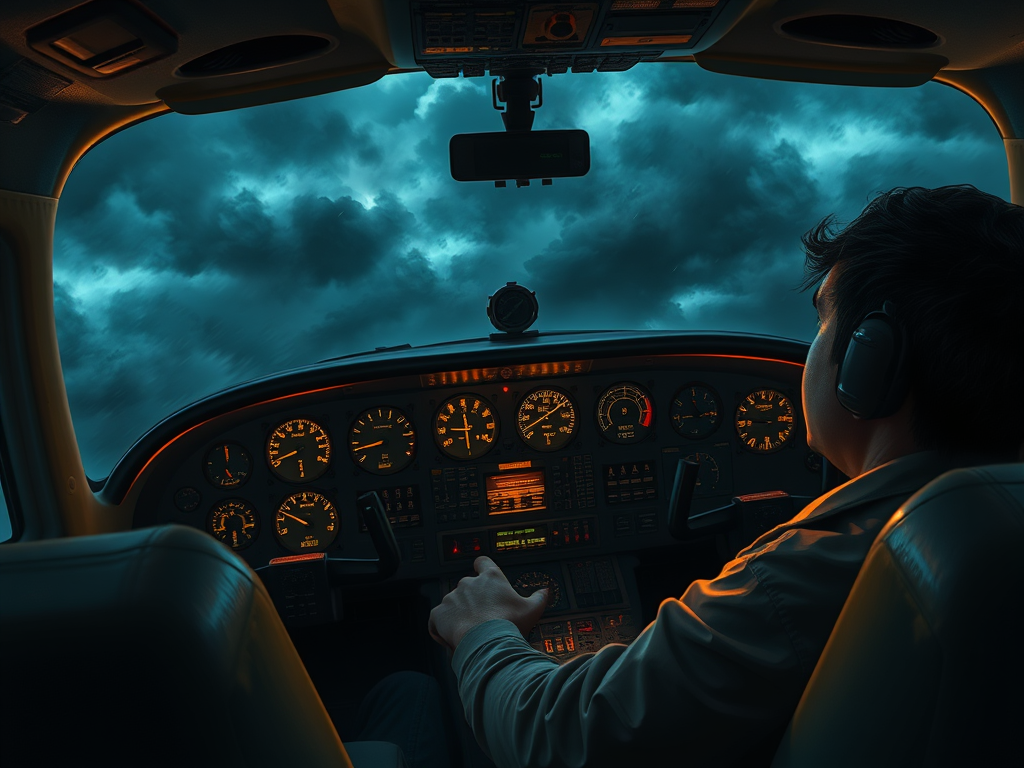
    Information seems like such a small thing—just patterns of data flowing through reality—until it becomes the thread between life and death. I learned this at four thousand feet in a Bonanza F33A, when my autopilot failed and the clouds swallowed every reference to the natural world. My body screamed that I was climbing, the visceral sensation so overwhelming that my hands instinctively pushed the nose down, but the airspeed indicator was already dancing upward. Reality fractured as my inner ear insisted we were banking, turning, spiraling toward disaster. In that moment, I had to choose between millions of years of evolutionary instinct and six glowing instruments on my panel. I forced myself to stop feeling and start seeing: airspeed, attitude, altitude, turn coordinator—just pure information flowing in and out of consciousness until the attitude indicator confirmed straight and level flight.

    My voice cracked as I keyed the mic, time stretching like taffy as I forced out my request for vectors to the nearest airport. The controller’s concern filtered through the static—”November three three alpha, say conditions?” Another burst of turbulence slammed through the airframe as I processed frequencies, programmed approaches, all while my eyes maintained their desperate dance across the six instruments that stood between me and oblivion. My second radio call came out steadier, a feat of conscious control that felt like operating a puppet made of adrenaline and terror, but the controller caught the strain beneath the practiced words. The complexity of my world heightened as I dialed in the approach—one more instrument to scan, then two more indicators to watch as I descended the tunnel down the approach. My world continued to tumble and twist and collide with each new data point until I saw it: a flicker at the edge of consciousness, so faint it might have been wishful thinking—the first pulse of the rabbit lights through the murk. The strobes whispered at the edge of perception, a dream I couldn’t trust, forcing me back to my instrument scan even as they beckoned. Reality wavered between the cold certainty of my gauges and these quantum ghosts of guidance, each pulse pulling me deeper into the space between what I could see and what I could trust.

    My feet worked the rudder pedals in an ancient dance of muscle memory, the Bonanza’s wheels tracking the centerline as my biological programming executed its routines. My gaze locked on the dashed white line ahead, each segment streaming beneath the nose like raw machine code. The solid white runway edges processed through my peripheral vision as parallel data streams, while the broken centerline fed directly into my brainstem—binary pulses of information flowing through neural circuits older than consciousness itself. In those suspended moments of deceleration, as my autonomic nervous system surged with survival protocols, I became the machine: a biological computer processing streams of visual data, executing landing subroutines with prehistoric precision, while my higher consciousness drifted in the space where reality had fragmented. There is no choice between information and instinct—it simply is, like gravity or light, a fundamental pattern woven into the fabric of existence. And in that moment of understanding, the universe I thought I knew unraveled into streams of pure information.

    I still dream of those first strobes flickering through the murk, but now I see their pulses everywhere: in the endless scroll of social media feeds, in the flickering screens that shape our thoughts, in the digital highways that carry our consciousness from one reality to another. That night in the clouds, I had trusted instruments over instinct to save my life. Now I watch billions do the same thing every day, their minds guided by glowing panels of their own, processing streams of data they never question. The instruments that saved me were honest—they showed true altitude, true heading, true airspeed. But what happens when the instruments themselves are programmed to deceive? When the very data we depend on becomes a tool for reshaping what we believe is real?

    Stop reading for a moment. Feel the weight of your body, the rhythm of your breath, the absolute certainty of your existence, your sense of self, your beliefs about the world around you. Now consider: every sensation you’re experiencing, every thought you’re thinking, every memory that makes you who you are—it’s all just information being processed by your neural networks. Your consciousness, that thing you call “I,” is simply a pattern emerging from this flood of data. We think we’re the pilots of our own minds, but we’re more like passengers watching a simulation, believing we’re in control while algorithms deeper than thought itself shape our course through reality.

    The screens you stare at, the news you absorb, the social validation you seek—these aren’t just influences on your thoughts; they are your thoughts, restructuring the very networks that generate your consciousness. Each notification, each headline, each carefully curated feed is reprogramming the biological computer that you think of as “you.” Just as my plane’s instruments overrode my body’s desperate insistence that up was down, today’s digital instruments override your deep intuitions about what is true, what is real, what is right. The difference is, you don’t even feel the spatial disorientation anymore.

    Watch how we spiral now, a nation of minds tumbling through digital clouds, each group convinced they alone maintain straight and level flight. We war with our neighbors over realities crafted in server farms, our tribal identities programmed by algorithms that feed on conflict and confusion. The simple truths that once united us—family, community, shared purpose—dissolve in the acid of engineered outrage. While we dance our prescribed tribal dances, clicking and sharing our prescribed tribal rage, the puppet masters in their Silicon Valley towers pull their digital strings, transforming our collective disorientation into concentrated power. We are all flying in the soup now, but there are no honest instruments to guide us home, no rabbit lights leading us back to solid ground. The few who glimpse the truth face a stark choice: remain willfully blind and follow the herd, or face the terrifying reality that our consciousness itself has been hacked. Information seems like such a small thing, until you realize it’s everything—the code that builds our reality, the strings that move our thoughts, the walls of our digital prison. Welcome to the dystopia—it’s been here all along, hiding behind your screens, whispering that you’re still in control.

  • Power Dynamics in the Digital Age

    Power Dynamics in the Digital Age

    The world whispers in ones and zeros now, each bit a strand in an invisible web that binds us all. In the digital age, those who control the flow of information wield unprecedented power over human consciousness itself. Like DNA spiraling through living cells, data flows through the neural networks of our society, shaping reality with the precision of a genetic code. It writes itself into our thoughts, our beliefs, our very perception of truth—and the architects of our digital spaces hold the keys to the collective mind.

    Consider the seismic shifts unfolding before us: When a billionaire reaches out and grasps not steel or oil, but the synapses of our shared digital nervous system, the implications reverberate through society. Elon Musk’s acquisition of Twitter wasn’t merely a financial transaction; it was a seizure of the mechanisms that shape public discourse. With each tweak to the platform’s algorithms, with each amplification or suppression of certain voices, he demonstrates a crucial truth: in our era, power flows from control of the narrative.

    We’ve seen how information spreads in this new landscape: A misleading tweet can replicate through networks like a virus, gaining potency with each digital transmission. Strategic silences can fall over inconvenient truths, with algorithms burying facts beneath floods of distraction and misinformation. These are not accidents, but the calculated results of systems designed to guide the vast currents of human attention.

    The danger lies not just in overt censorship, but in the subtle cultivation of certain thoughts over others, the gentle nudging of millions of minds toward predetermined conclusions. Personalized newsfeeds, targeted advertisements, and curated content recommendations all serve to create filter bubbles that isolate us in echo chambers of our own beliefs. The line between organic opinion and manufactured consensus blurs.

    We now inhabit a world where reality is increasingly consensual, shaped by the narratives that reach critical mass in our shared digital spaces. Each algorithm that influences what content we consume is a brush stroke on the canvas of collective consciousness. And as we’ve seen from the Cambridge Analytica scandal to the spread of QAnon conspiracies, these tools can be weaponized to profound effect.

    As Musk expands his informational empire, now potentially bolstered by data from his stake in Dodge, we must grapple with the staggering power one individual can wield over public perception. The risk of this informational infrastructure being leveraged to support increasingly centralized, even authoritarian systems of control cannot be ignored.

    So what can we do? The first step is awareness—a clear-eyed understanding of the forces shaping our digital lives. We must push for transparency in how these influential algorithms are designed and demand accountability from those who deploy them. We need robust public conversations about the power and pitfalls of personalization, the risks of information monopolies, and the importance of diversity in our informational diets.

    Digital literacy must become a cornerstone of education, equipping generations to navigate the onslaught of data with discernment. We should champion decentralized, open-source alternatives to the walled gardens of Big Tech. Most crucially, we must reassert our agency over our own beliefs and opinions, resisting the tides of manufactured consensus.

    The web trembles with possibilities. The code that writes our reality hums beneath our fingertips. In this age of informational warfare, maintaining the integrity of our thoughts may be the ultimate act of resistance. We stand at the precipice of a new era, where the battlegrounds are digital and the territories are minds. The question now is not whether we can stem the tide, but whether we have the wisdom to chart our own course through the rising currents.

  • Living Truthfully: Healing in the Face of Dystopia

    Living Truthfully: Healing in the Face of Dystopia

    From the heights of material excess to the quiet solitude of a log cabin in the Nantahala Gorge, I’ve watched America’s descent into what feels like a series of overlapping dystopias, each one folding into the next like origami crafted from pages of yesterday’s promises. Once, I was the archetypal success story: a physician with three houses scattered like autumn leaves across the landscape, Mercedes gleaming in driveways like chrome-plated promises, motorcycles crouching in garages like metallic panthers, and a private plane that sliced through clouds as carelessly as a scalpel through flesh, each ascent burning fuel like I burned through the years, climbing higher while my soul sank lower. I was living the dream—or so I thought—until the dream began to crack, revealing the nightmare of our collective unconsciousness beneath.

    The first fracture came through an unlikely source: Pete Buttigieg’s 2016 campaign speeches on climate change. His words led me to Wells’ “The Uninhabitable Earth,” a book that became my personal apocalypse. I read it twice, then listened to it again as an audiobook, each passage burning deeper into my consciousness like acid etching truth into metal. Each page turned over another damning piece of evidence against our collective way of life, until the weight of knowledge became a burden too heavy to carry in silence. Here I was, a healer by profession, unknowingly contributing to the very forces threatening humanity’s survival, each flight leaving contrails of carbon across the sky like sutures on the atmosphere’s wounded skin.

    The revelation sent me spiraling into a crisis of conscience that opened up beneath me like a sinkhole in seemingly solid ground. Each page of Wells’ book became another brick in a wall between me and my peers, isolating me in a fortress of uncomfortable knowledge. How many carbon-heavy flights had I taken simply because I could? How many resources had I consumed in maintaining multiple homes that stood empty most of the year, like mausoleums to excess? The weight of this realization became unbearable, like carrying a terminal diagnosis I couldn’t unsee.

    In my awakening, I found myself suddenly alien among my peers, like a man who could see infrared in a world of the colorblind. I tried to speak of the coming catastrophe, but my words fell into conversations like stones into deep wells, making tiny splashes before being swallowed by the darkness of indifference. At cocktail parties, my concerns about climate change cleared rooms faster than a fire alarm, leaving me standing alone with my untouched martini, watching others drift away like leaves before an autumn wind.

    The isolation grew like kudzu over my former life. Each passing jet overhead became a personal affront, every neighbor’s new SUV a fresh wound. The world around me continued its dance of consumption, an endless waltz of acquisition and disposal, while I stood frozen in my newfound awareness, like a man who’d suddenly noticed that everyone around him was sleepwalking toward a cliff.

    So I did what any good physician would do when confronting a malignancy: I cut it out. The houses went first, then the cars, the plane—all the trappings of success I’d accumulated like medical credentials after my name. I retreated to a log cabin in the Nantahala Gorge, trading luxury for simplicity, excess for essence. But the loneliness followed me here, as persistent as mountain fog, seeping through the cracks of my newfound sanctuary.

    In my self-imposed exile, I learned to cultivate a peculiar kind of peace with my outrage. Like a monk tending a garden of bitter herbs, I learned to transform my desperation into a kind of meditative practice. The roar of passing trucks on distant highways became my meditation bell, each rumble a reminder of the world I’d left behind, a world still rushing headlong toward its own immolation.

    Then came the pandemic, sweeping across our society like a fever through a weakened body. I watched in horror as my profession—medicine itself—became a battlefield strewn with the casualties of willful ignorance. Colleagues who fought to save lives through vaccination were branded as conspirators, their white coats suddenly marking them as targets rather than healers. Scientific evidence was dismissed as easily as yesterday’s newspaper, crumpled and tossed aside in favor of whatever truth felt most comfortable, like choosing painkillers over proper treatment. The virus exposed our collective madness like an X-ray reveals hidden fractures, but unlike a typical diagnostic image, this one showed breaks in our very social fabric that no amount of conventional medicine could heal.

    Now, as Trump’s shadow lengthens like a cold front approaching the gorge, I find myself witnessing the unraveling of yet another layer of American society. But unlike nature’s storms that cleanse and renew, this human tempest threatens to erode the very foundations of our democratic landscape. The government, once trusted as a stabilizing force, is being portrayed as a tumor that must be excised. Democracy itself is being diagnosed as terminal, too complex and slow to survive in a world where truth has become as fluid as the morning mist rising from the gorge.

    Here in my voluntary simplicity, I’ve found a different kind of healing—not the sort that shows up on medical charts or bank statements, but the kind that happens when you finally stop running from the truth of what we’ve done to our world and start living in harmony with what remains. Yet the healer in me writhes in constant agony, like a bird trapped behind glass, watching disaster approach but unable to intervene. The urge to heal, embedded in my DNA through decades of medical practice, screams at me to do more, save more, fix what’s breaking. But how do you write a prescription for a civilization’s collapse? What treatment plan can address the terminal diagnosis of a planet?

    These questions haunt my nights like chronic pain, yet paradoxically, it’s in this very helplessness that I’ve found my peace. The wisdom of the gorge has taught me that even in our darkest hour, there is still beauty worth preserving, still hope to be found in the simple act of living deliberately and truthfully. I’ve learned to be a different kind of doctor now—one who treats his own despair with daily doses of sunrise, who finds therapy in the whisper of wind through ancient trees, who measures healing not in cured patients but in moments of authentic existence.

    Though I cannot heal the whole world’s fever, I can at least tend my own small piece of it with the care and attention it deserves. My prescription pad has been replaced by daily observations of natural rhythms, and my diagnosis is both terrible and hopeful: humanity is sick, but here in this gorge, I’ve found a treatment plan that works—one mindful day at a time. It’s not the healing I was trained for, not the medicine I once practiced, but it allows me to sleep at night, knowing that in my own small way, I’m living in alignment with the truths I’ve come to understand. Perhaps that’s the only real medicine any of us can practice in these dystopian times: the simple, painful art of living truthfully, even when the truth itself feels like a terminal diagnosis.

  • Unlocking Free Will: The Quantum Brain Connection

    Unlocking Free Will: The Quantum Brain Connection

    The Lock That Shouldn’t Have Opened

    I was thirteen, fingers twitching with adolescent energy, when the combination lock landed in my hands. It was cool, heavier than it looked, its brass surface dulled by time and sweaty fingers. The kids on the bus had tried their luck, spinning the dial in vain, their frustration mounting. I wasn’t thinking. I wasn’t trying. My fingers turned the dial—three random numbers, numbers I’d never seen before. A metallic click. The lock opened. Silence fell. A weight pressed against my chest, something deeper than coincidence, something unexplainable.

    The Illusion of Free Will

    We like to think we are the architects of our lives, that every decision we make is the product of our own volition. But what if free will is nothing more than an elegant illusion? A trick of the mind, a story we tell ourselves?

    Science increasingly suggests that we are protoplasmic computers, coded by genetics, shaped by experience, operating under the illusion of choice. Studies by Benjamin Libet in the 1980s revealed that the brain begins an action before we are even aware of deciding it. Our choices, it seems, are made in the shadows before consciousness catches up.

    If our choices are written before we ever become aware of them, then who—or what—is really writing the script? And if we are merely passengers in a preordained journey, why do we feel the tension of the crossroads, the electric charge of possibility before we choose a path?

    The Mind: A Universe Within

    Despite our advances in neuroscience, we do not truly understand how the brain works. We can track electrical signals, analyze synapses, and catalog cognitive functions, yet the essence of consciousness remains elusive. The brain sprawls before us like an unfathomable cosmos—neurons firing like distant galaxies, thoughts flickering like celestial debris.

    This brings us to an unsettling possibility: What if the mind operates beyond classical physics? What if our thoughts, our sudden flashes of intuition, are not confined to the mechanical but instead brush against something deeper—perhaps a quantum field of consciousness?

    The Quantum Brain Hypothesis

    Some researchers whisper of an uncharted frontier: that consciousness may arise from quantum processes. The Orchestrated Objective Reduction (Orch-OR) theory, developed by physicist Roger Penrose and anesthesiologist Stuart Hameroff, suggests that microtubules—tiny structures inside our neurons—may act as quantum processors.

    If true, then our thoughts might not be just electrochemical impulses but fluctuations in the quantum realm, interwoven with the fabric of reality itself. The implications are staggering: Could this explain moments of inexplicable knowing, gut instincts that defy logic, flashes of genius that emerge from the ether?

    Nature’s Quantum Blueprint

    If our brains are quantum engines, we wouldn’t be alone—nature has long been fluent in quantum mechanics.

    • Photosynthesis – Plants convert sunlight into energy with astonishing efficiency, a process scientists now believe leverages quantum coherence, allowing energy to exist in multiple states simultaneously.
    • Olfaction (Smell) – Once thought to be a simple lock-and-key mechanism, new research suggests that scent detection may hinge on quantum vibrations, meaning our noses may already be interfacing with quantum reality.
    • Bird Navigation – Migratory birds appear to use quantum entanglement to sense Earth’s magnetic field, their perception tethered to particles flickering in and out of superposition.

    If photosynthesis, smell, and bird migration all dance with the quantum world, is it so inconceivable that our brains might as well?

    The Moment of Knowing

    Years later, I sat under the fluorescent glare of an office in Gainesville, Florida, nervously awaiting my turn to speak. It was an interview for an ENT residency, the air thick with the pressure of expectations. That morning, for no reason at all, I had found myself reading about ophthalmology and diabetes—a subject I had no particular reason to study.

    Then the question came: “How does diabetes affect the eye?”

    The world slowed. The answer rose in me before I even had time to think. Why had I read about that, of all things, just that morning? Had I anticipated it? Or had I tapped into something beyond my own awareness—some hidden web of connection I couldn’t see but could, in fleeting moments, access?

    Does Quantum Consciousness Mean We Have Free Will?

    If the brain operates at a quantum level, then our choices may not be pre-determined in a purely mechanical way. Quantum mechanics thrives on uncertainty, on probability rather than fixed outcomes. If our thoughts exist within this realm, we may be more than predictable machines—we may be travelers of probabilities, dancing between different realities before one solidifies into action.

    This doesn’t mean we have total control, but it does mean that our minds may function in ways far stranger than we ever imagined. That our choices, our insights, may emerge from a quantum sea of possibilities, shaped not just by past experiences but by entanglements we do not yet understand.

    The Question Remains

    So, do we have free will? If we are merely biochemical machines, the answer seems to be no—our choices are dictated by neural circuits and past experiences, nothing more than pre-programmed responses masquerading as independent thought.

    But if consciousness is truly quantum, then perhaps our decisions are not entirely determined. Perhaps we are flickers of probability, moving through waves of potential, glimpsing the infinite before collapsing into a single path.

    Maybe free will isn’t about control—but about glimpsing the unseen, dipping into the quantum tide that pulls at the edges of reality. Maybe we are not masters of our fate, nor slaves to it—but something stranger still. Passengers with glimpses of the map, hearing the whispers of the unknown.

  • Understanding the Dark Enlightenment: Power vs. Truth

    Understanding the Dark Enlightenment: Power vs. Truth

    The Death of Rational Decision-Making

    In the sterile corridors of the emergency room, where life’s fragility is laid bare, I once stood as a beacon of trust. Patients, their faces etched with worry, entrusted their very beings to my expertise. Yet, as the years unfurled, a subtle shift emerged. Patients began arriving not just with symptoms, but armed with printouts, online diagnoses, and a burgeoning skepticism. The intricate tapestry of modern medicine, woven with threads of advanced science and technology, had become a labyrinth too convoluted for the average mind to navigate. In their quest for clarity, many clung to the siren song of hyper-individualism—a creed that champions personal judgment above all else. This shift, born from the loins of hyper-capitalist ideologies championed during the Reagan and Thatcher eras, fostered a populace yearning for simplicity, for black-and-white answers in a world painted in shades of gray.

    As a society, we are now drowning in complexity. Quantum physics delves into realms unseen, artificial intelligence evolves with a mind of its own, biotechnology reshapes the very essence of life, and economic systems intertwine nations in delicate balances. The sheer magnitude of this complexity overwhelms, leading many to retreat into the comforting embrace of emotion and belief, forsaking the arduous path of informed decision-making. This retreat has carved a chasm between the seekers of truth and the pursuers of power.

    The Rise of Authoritarian Governance

    In the face of such overwhelming intricacy, a disquieting notion takes root: perhaps the masses, adrift in this sea of information, are ill-equipped to steer the ship of society. Would it not be prudent, then, to entrust the helm to a select few—intellectual elites adept at deciphering the world’s complexities? This is the clarion call of the Dark Enlightenment, a philosophy that decries democracy as a failed experiment, susceptible to the whims of the easily swayed. It advocates for a governance model akin to a corporation, where decisions are made by a technocratic aristocracy, an authoritarian ruler, or perhaps even a centralized AI, all operating without the cumbersome interference of public opinion.

    This yearning for decisive leadership finds embodiment in figures like Donald Trump. To his followers, he represents a repudiation of traditional expertise, a bulwark against a system they perceive as deceitful and manipulative. Disillusioned and disenchanted, they gravitate towards the certainty he projects, the simple narratives he weaves, eschewing the uncomfortable complexities of science and nuanced discourse.

    The Battle Between Power and Truth

    Yet, herein lies a perilous conundrum: when such elites ascend to power, do they remain faithful to the pursuit of truth, or do they succumb to the seductive allure of power for its own sake? History is replete with tales of power’s corrupting influence. Time and again, ruling classes, initially guided by rational ideals, have prioritized their own preservation over the welfare of society. They manipulate information, sidestep pressing issues like climate change and wealth inequality, and distract the populace with cultural skirmishes and misinformation. The Dark Enlightenment’s framework for managing complexity becomes a self-devouring beast when power supersedes truth.

    This scenario mirrors the E.O. Wilson ant experiment, where civilizations, much like ant colonies, become so hierarchical and specialized that they collapse under their own weight. Humanity teeters on a similar precipice, not due to a lack of intelligence, but because the gravitational pull of power often eclipses the guiding light of truth.

    The Only Path to Survival

    To navigate this era of escalating complexity, we must chart a different course. We cannot cede control to authoritarians who manipulate for personal gain, nor can we rely solely on an uninformed populace to make decisions of great consequence. The path forward lies in cultivating an elite that governs not with an iron fist, but with a nurturing hand, prioritizing the well-being of people and the environment. Technology, science, and policy should serve as instruments of upliftment, not oppression. Governance must be transparent, evidence-based, and committed to long-term survival rather than short-term domination. The leaders of tomorrow must master sustainability, embrace complexity, and uphold the sanctity of truth.

    For if power continues to triumph over truth, humanity is destined to crumble under its own weight, repeating the cycles of rise and fall that have claimed countless empires before us.

  • Reclaiming Your Mind in the Digital Era

    Reclaiming Your Mind in the Digital Era

    1949: The Birth of an Invisible War

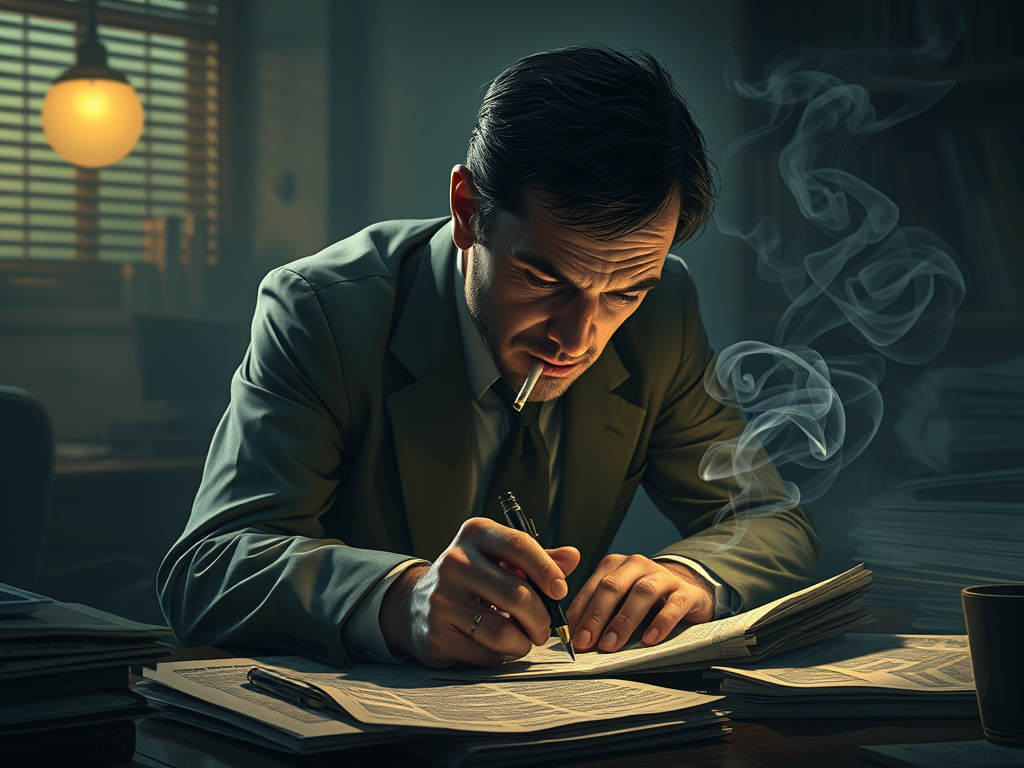
    The man sits alone in a smoke-filled office, a cigarette burning low between his fingers, the smoke curling up toward the dim, flickering light. His desk is covered in newspapers, their headlines still wet with fresh ink. Outside, the city hums—horns blaring, typewriters clacking, reporters shouting into rotary phones—but inside, the only sound is the scratch of his pen against paper.

    He reads the headline one last time. It’s close—almost right—but something is missing. His fingers hover over the words. Was it too much? Too obvious?

    No.

    It’s necessary.

    The public needs to understand the right version of events. He exhales, the smoke curling around his face, and scrawls his final revision. Done.

    Tomorrow morning, when this newspaper lands on doorsteps across the country, people will wake up believing something they didn’t believe yesterday. They will not question why the story feels right, why it confirms their suspicions, why it stirs just enough fear to keep them watching, listening, obeying.

    Because the most powerful lies don’t feel like lies.

    They feel like the world simply revealing itself to you.

    This is Operation Mockingbird.

    A real CIA program, born in the early Cold War, designed to control the media without the public ever knowing. Instead of silencing journalists, they hired them. They placed operatives inside The New York Times, The Washington Post, Time magazine, major radio stations, and television networks. They didn’t need to fabricate stories. All they had to do was tilt the scales—nudge a phrase here, omit a sentence there—until the public believed they were thinking freely, when in reality, their thoughts had already been guided.

    By the 1970s, Operation Mockingbird was exposed, its tendrils supposedly severed. The CIA claimed it no longer manipulated the media.

    But the lesson had been learned.

    Control the flow of information, and you control the mind itself.

    And then, the internet was born.

    The Quantum Nature of Perception

    For decades, physicists struggled with a strange truth: reality is not fixed until it is observed. The famous double-slit experiment proved that light behaves like both a particle and a wave—until someone looks at it. The moment we measure it, it collapses into one form or the other.

    Reality bends to the observer.

    For years, this was just an oddity of the quantum world, a riddle confined to laboratories. And then, someone realized that the same principle applied to human minds.

    If reality conforms to observation, then controlling what people see means controlling what is real to them.

    This was the gift of Operation Mockingbird. But newspapers and television had limits. They could only push a single narrative at a time. The digital world—the world we live in now—has no such limitations.

    Because the people behind the headlines are no longer men in smoke-filled rooms.

    Now, they are machines.

    The Age of Algorithmic Perception

    The headline is no longer written by a CIA operative. It is written by data.

    The machine does not need cigarettes or ink-stained fingers. It does not need to plant a spy in a newsroom or slip cash to a journalist. It does not need to debate how to shape the narrative, because it already knows—mathematically, precisely, ruthlessly—what will make you believe.

    The algorithm is always watching. It knows what makes you stop scrolling. It knows what headlines make your pulse quicken. It has measured which stories keep you engaged the longest, which ideas spark your emotions, which fears leave you staring at the screen, unable to look away.

    The newspaper of 1949 whispered in your ear.

    The algorithm of 2025 does not whisper.

    It does not wait.

    It does not nudge.

    It knows.

    It anticipates.

    It does not tell you what to think—it makes you think it was your idea all along.

    You think you are choosing what you see.

    You are not.

    What you see is being chosen for you.

    Information: The Code of the Universe

    Everything is built on information. Not just society, not just knowledge, but existence itself.

    The fabric of reality is math. DNA is a biological code, storing instructions for life in a language more ancient than speech. Thought itself is an algorithm, electrical signals firing between neurons, weaving consciousness from raw data. Everything—from the movement of galaxies to the flicker of a screen before you—is governed by patterns, sequences, logic.

    To control information is to control the universe itself.

    And that is why the war has moved beyond borders, beyond governments, beyond the crude battles of the past. The new war is fought in pixels. It is waged through the information that flows across your screen, through the invisible choices being made about what you see, what you hear, what you come to believe.

    You do not notice because a well-designed cage does not feel like a cage. It feels like home.

    The Slow Death of Truth

    Once, truth was slow. It required effort. It demanded observation, verification, patience. But today, truth competes against belief, and belief is faster. Belief spreads like wildfire, jumping from screen to screen in milliseconds, embedding itself in the minds of millions before truth has even gotten out of bed.

    And those who understand this—the engineers of perception, the architects of the algorithmic age—know one simple fact: people do not want the truth.

    They want a story that feels true.

    The ancient world had shamans, prophets, mystics—men who whispered in the ears of kings, bending reality with their visions. Now, the modern world has algorithm designers, social engineers, data scientists. They do not need magic. They do not need divine authority.

    They have something stronger.

    They have the numbers.

    The numbers tell them what you like, what you fear, what makes you pause for just a moment longer. They feed that information back into the machine, refining, optimizing, fine-tuning reality until it feels just right—until it becomes impossible to doubt.

    And the best part?

    You never realize it is happening.

    How to Reclaim Your Mind

    You are not powerless. But you must understand the battlefield.

    1. Stop assuming information is neutral. It is not. Every word, every headline, every viral post—each is engineered, shaped, optimized for effect.
    2. Disrupt your algorithm. Read things you disagree with. Question narratives that feel too satisfying. Explore ideas that make you uncomfortable.
    3. Recognize that emotion is the enemy of clarity. The more something triggers rage, fear, or euphoria, the more likely it is designed to manipulate.
    4. Follow the evidence, not the story. Reality is messy, contradictory, unresolved. Beware of neat conclusions.

    The battle is not coming. It is here. It is happening in real-time, in your feed, on your screen, in the thoughts that feel most natural to you.

    The truth is still out there.

    But to see it, you must first unsee the illusion.

    And when you finally do—who will you trust more?

    Yourself?

    Or the machine?

  • The Body and Mind: Understanding Our Hidden Strengths

    The Body and Mind: Understanding Our Hidden Strengths

    A body is a vessel, a ship of sinew and bone. It carries us across the tides of time, through tempests of pain and islands of fleeting joy. But the ship alone is not enough. It is the wind—unseen, formless—that determines whether we drift aimlessly, crash upon rocks, or soar across boundless horizons. That wind is emotion. It fills our sails or leaves us stranded, helpless against the vast ocean of existence.

    I feel the creaks in my joints, the dull protests of a body that once obeyed without question. The neural pain, sharp as a dagger, whispers reminders of mortality, of wear and fragility. There was a time when movement was effortless, when I glided through the world, unseen but present, unnoticed but whole. Now, I pause where I once ran, hesitate where I once leapt, not for fear but because my ship no longer obeys the same commands.

    Yet it is not the body that stops me—it is the wind.

    Pain slows flesh, but it is emotion that dictates whether we press on or surrender. I could give in to the stillness, let despair tether me to the shore, watching as others sail ahead. Or I could catch whatever breeze remains, even if only a whisper of air, and keep moving forward, however slow.

    Invisibility is not just being unseen by others—it is the slow erosion of self in one’s own mind. When strength fades, when pain settles into the bones like an unwanted guest, the mind whispers: You are fading. You are less. You are no longer of consequence. But these are illusions spun by the wind. They shape how we see ourselves, how we see the world. A man can be whole in a broken body. A spirit can be crushed in a vessel unscarred.

    I watch as others climb, their movements effortless, their laughter unburdened. False praise drifts through the air like hollow echoes, and I wonder—are they rising, or are they merely climbing without knowing why? The ladder of life is filled with climbers, each seeking height, each chasing the illusion of a summit that does not exist. They push, they jostle, they yearn to be seen, to be validated. And yet, I have seen the strongest among them crumble under invisible weight, their bodies perfect, their minds fractured.

    What, then, truly controls us?

    It is not flesh. It is not strength. It is emotion—the master we cannot see, the force that filters our world. We rise when it lifts us, we fall when it betrays us. It is the hidden tide beneath the ship, shaping its course, unseen but omnipotent.

    And so, I do not carve a path, nor do I fight the sea. I listen, I watch, I tend. The wind is neither mine to summon nor to still, only to meet as it comes, to catch as it passes. The world does not yield to my will, nor I to its weight—I only learn to move with it, to open myself to its direction.

    Beyond the horizon, something waits—not destiny, not fate, but the shifting breath of the universe, weaving unseen currents, tracing paths I cannot yet fathom. The air stirs. The water beckons. And so I go—not steering, not resisting—only allowing.