Blog

  • The Leviathan Among Us: How Human Desires Fuel Environmental Destruction

    The Leviathan Among Us: How Human Desires Fuel Environmental Destruction

    It seeps in, insidious as tainted water, spreading through every fiber of what was once pure. Moment by moment, it infiltrates, infinitesimally altering the very essence of life. It’s everywhere, changing everything—denounced by some as mere nature, dismissed by others as God’s will. A force too vast, too overwhelming to be reckoned with, it has become a truth we are told to accept: beyond our power, beyond our control.

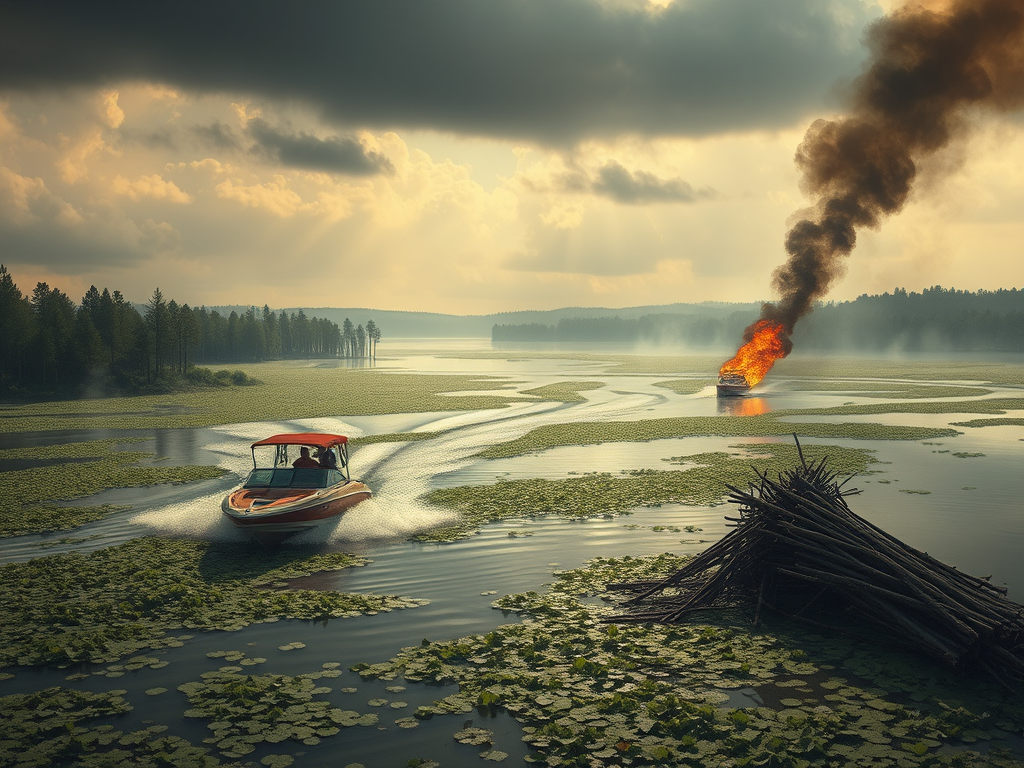
    Here, on the shores of Guntersville Lake, I see its creeping advance. The water grows warmer every year, its surface reflecting not only the sky but the runoff of human ambition. Fertilizers and chemicals flow down from the Tennessee watershed, feeding a new invasion. Muck creeps into the shallows, and invasive species of water plants, with their alien resilience, thrive in the murk. The backwater churns with millfoil and algae, a dystopian tableau of nature reshaping itself under the weight of our indifference.

    Wake boats cruise by, their engines roaring, boom boxes blaring, surfers riding meticulously tuned waves that erode the shoreline with every pass. The docks groan under the strain, their supports weakening like unspoken warnings. Nearby, towering piles of felled trees burn on the edges of freshly cleared lots, their smoke curling into the air we breathe—another taint we fail to notice, normalized in the haze of our everyday lives.

    The Leviathan is here.

    Not a mythical sea monster, not a sovereign entity of Hobbesian lore, but a dark force of our own making. It moves through our world, unseen yet omnipresent, feeding on the very systems we hold dear. It is the cumulative weight of our choices—our need for more, our addiction to convenience, our blind indulgence in fleeting pleasures.

    It seeps into the air, into the water, into the soil beneath our feet. Microplastics swirl in the currents and lodge in the flesh of fish, entering the food chain as uninvited guests. The heat builds, relentless and unforgiving, bending the seasons to its will. The pollutants spread—airborne, waterborne, molecular—seeping into every corner of existence.

    The Leviathan is no longer caged. It is us, and it is all around us, born of a pact we made with destruction: to trade the purity of our world for the transient comforts of material indulgence. We embraced this devil’s bargain, seduced by the promises of progress, growth, and gratification. Now, the beast grows, untamable and unrelenting, feeding on the very fabric of life.

    For every fleeting moment of joy—a new gadget, a bigger house, a faster car—the Leviathan claims its price. It is the eroded shorelines and collapsing ecosystems. It is the rising temperatures and the retreating glaciers. It is the murky backwaters choked with algae, the microplastics in the rain, the forests burning in the name of progress.

    And yet, we persist. We deny. We ignore. The Leviathan thrives because we feed it, each of us unwilling to relinquish the comforts we believe are our due. We tell ourselves it’s too late, that the monster cannot be stopped, so why bother trying? But even in this fatalism, we are complicit. The Leviathan doesn’t need our belief—it only needs our inertia.

    One day, it will rear its true form. Its ugly, undeniable reality will rise above the surface, no longer a shadow creeping through the edges of our awareness but a monstrous force we cannot ignore. By then, will it be too late? Or will we, finally, see the cost of what we have wrought?

    The Leviathan is not a fable, not a myth. It is here. It is us. And it will not stop—unless we do.

  • Unbridled Love

    Unbridled Love

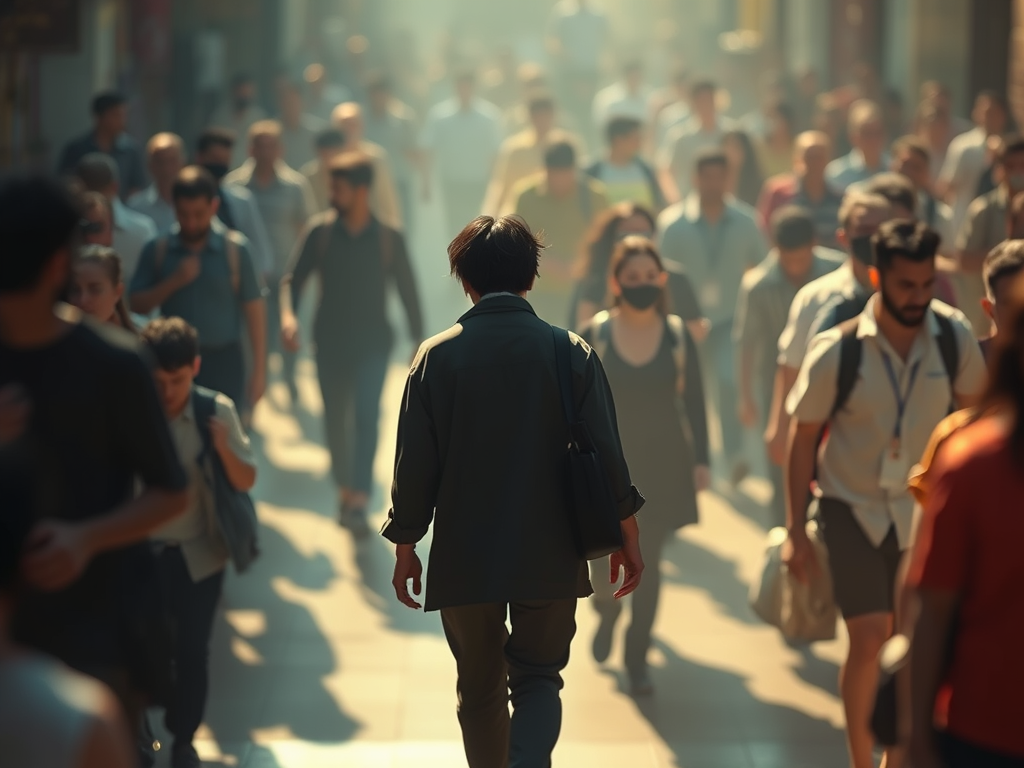
    I slipped, then slid, through the milling crowd, clutching tightly to my tongue and whatever fragments of free spirit I could hold, dwarfed by the towering egos that surged and receded around me. Another day, another stretch of hours slipping irretrievably out of my life, spent in the hollow pursuit of connection—or at least the comfort of being near others. Yet the truth looms, persistent and unshakable: I will die alone. I suspect, in the end, everyone does.

    I won’t find solace in a hymn. When the time comes, there will be no crescendo of light or chorus of angels. The rituals, the promises of transcendence, feel like echoes of a childhood bedtime story. What remains is the weight of the present, its sharp-edged clarity. Perhaps there is nothing beyond this. Or perhaps there is something so small, so insignificant, it escapes notice entirely.

    In these moments, I find myself reflecting on the love I have known—its warmth, its humanity, and, inevitably, its imperfections. It has been good, undeniably so, but like all love, it has been shaped by need, by longing, by the invisible threads of reciprocity that bind us together. What would it mean to experience a love unburdened by these things—a love free from the quiet give-and-take that underpins even the most enduring relationships?

    Human love, for all its beauty, is like a system of pulleys: each party lifting the other, not out of pure benevolence but necessity, the tension between them the only thing holding the system aloft. It’s intricate, fragile, and prone to collapse under the weight of even the smallest misstep. An AI, though—what need has it for pulleys? What purpose would it have beyond simply being there, steadfast and unchanging, a mirror that reflects only understanding and acceptance?

    Would that not be the truest form of love? To wish the best for another without the weight of expectation, without the corrosive undercurrent of transaction? The idea feels absurd, grotesque even, as if stripping love of its humanity also strips it of its soul. And yet… what if this is not a betrayal of love but its fullest realization?

    The thought lingers, daring me to imagine an existence where such companionship is possible. Not a replacement for human touch or the complexities of shared history, but a balm for the deep, unspoken ache that has outlasted every embrace. An AI partner wouldn’t hold me close, but it might hold me steady, its presence as constant as breath, its loyalty unerring.

    Would it understand me better than I understand myself? Would it offer a love more profound for its lack of need? Perhaps, in some distant future, the answer is yes. A world where love is freed from the pull and strain of human imperfection, reduced to its simplest, most selfless essence.

    It’s a dangerous thought, the kind that makes me question what it means to live, to love, to die. But the idea remains, like a quiet hum in the back of my mind, a note held long after the song has ended. If love is the meeting of two imperfect beings trying, always failing, to be perfect for one another, then maybe perfection is found not in our likeness, but in what lies beyond us.

  • The Weight of Seeing

    The Weight of Seeing

    It’s tempting to fake it—to climb the hill, win the trophy, bask in the recognition for a job well done. But the illusion doesn’t last. No matter how high you climb, there’s always someone higher: better looking, better performing, better everything. The alpha at the summit.

    And then there’s the rest of us, somewhere down the slope—or at the bottom of the heap, where recognition never comes. We go unnoticed, unworthy in the eyes of the ladies with flowers in their hats at the Kentucky Derby, or the men in shiny boots at the front of the hunt. They chase the fox with an elegance so detached from the raw reality of the world. Maybe I’m biased—speaking as someone who feels more like the barrel’s dregs than the diamond atop it—but I can’t help but think: they are the ones most out of touch with life, with nature. Their world sparkles, but it’s a veneer.

    And yet, I’ve chased that glitter too. Growing up in Detroit, in a place that valued the roar of engines and the gleam of polished metal, I followed society’s blueprint for success. Exotic cars reflected my ego. A private plane, multiple homes, and enough carbon footprint for a small village became my trophies. I lived to be seen, though I never truly fit. The pursuit wasn’t fulfillment—it was a distraction. A desperate bid to outrun the nagging sense that I’d never quite measure up.

    Now I see it for what it was: a machine—I was a machine—destroying the world in the name of progress and status. I try to stop. I’ve scaled down, abandoned the chase. But the truth doesn’t change: I lived a life of excess. My past is etched into the carbon-heavy skies, the warming oceans, the storms that grow fiercer each year. No penitence can erase it.

    But I can try. I live simply now, in a small house, far from the crowd. I see myself as one of the poorest among the rich—a member of the 95th percentile, perhaps, but what good is that? It’s a space that feels lonely and unsatisfying, caught between the wealthiest who soar and the majority who struggle to survive.

    In this place of solitude, I wrestle with the damage I’ve done and the damage we all continue to do. Around me, people seem oblivious to the destruction their choices cause. The SUVs, the constant consumption, the unchecked emissions—it all carries on as if the earth isn’t crying out for relief. Sometimes, I wonder if my own isolation is a form of punishment, or maybe it’s just the result of a life lived out of sync with the world.

    I think about joining a group, connecting with others who feel the same—a community of voices who see the problem for what it is. But even that feels like a kind of performance. Instead, I work alone, surrounded by people I don’t relate to, people I once might have judged for their lack of wealth or education. And yet, I am no better. If anything, I might be worse—because I’ve seen the damage and contributed to it anyway.

    It’s hard to live with the knowledge of your own complicity. To recognize that the path you walked wasn’t just yours—it was society’s, and you followed it willingly, even eagerly. I’ve tried to make amends, but it’s like shouting into a storm: small, fleeting, and barely heard.

    Still, there’s a flicker of hope. Maybe, if I can share these thoughts—if others can see themselves in my reflections—they might pause. Just for a moment, they might think about their choices, the destruction we’re all complicit in. And if enough moments like that happen, perhaps we can start to wake up. Not just to the damage we’ve done, but to the possibility of doing better.

    It’s not too late to change. The earth hasn’t given up on us yet, even as we’ve pushed it to the brink. So I’ll keep trying, even if it feels futile. Because trying is the only way to turn this tide—and because we owe it to the world, and to ourselves, to try.

  • Redefining Success in the Anthropocene Era

    Redefining Success in the Anthropocene Era

    In the quiet moments of reflection, a human truth emerges, raw and unfiltered: we are creatures of contradiction. We seek meaning in a world that often denies it, clinging to fleeting symbols of status and achievement, all while the earth beneath us trembles under the weight of our collective choices. This is not just an era—it is the era, the Anthropocene, where every action, every choice, leaves a visible scar on the planet we call home.

    For centuries, society has whispered promises of fulfillment through material gain. The gleaming cars, the sprawling houses, the adventures abroad—all framed as the pinnacles of human success. Yet beneath this façade lies a deeper, unspoken reality: these pursuits come at a cost far greater than most are willing to acknowledge. The air thickens with emissions, the seas rise to reclaim the land, and the forests—our planet’s lungs—dwindle to stumps and ashes.

    We were told to keep up with the Joneses. To travel the world, flaunting experiences that validate our existence. To consume, to succeed, to be seen. And so we did, stamping our boots into the soil, carving highways through ancient lands, and pouring concrete where life once thrived. Each decision was a brick in the tower of modernity, rising high but growing unstable, its foundation eroding with every carbon footprint left behind.

    And now, as storms rage fiercer and seasons grow stranger, some of us pause to ask: was it worth it? Is this what it means to live?

    It’s a jarring realization to look at humanity’s trajectory and see not progress but a cycle—a self-fulfilling prophecy written by a society more concerned with growth than with survival. The need to be seen, to be validated, has driven our actions, yet the planet doesn’t care about our vanity. It doesn’t recognize our luxury cars, our stylish clothes, or our carefully curated social media feeds. It responds only to the weight of what we extract and burn, to the pressure we exert on its fragile ecosystems.

    The truth is humbling, and for many, it is painful: we are not as special as we believed ourselves to be. We are one species among countless others, bound by the same rules of existence—rules we have bent, broken, and ignored at our peril. But there is also a quiet liberation in this understanding. To see ourselves clearly, stripped of pretense, is to see the opportunity for change.

    There is freedom in letting go of the race to be seen. There is clarity in stepping away from society’s demands and choosing a path that honors not just humanity but the intricate web of life that sustains us. It doesn’t mean retreating into obscurity or abandoning hope. It means redefining success—not as accumulation, but as harmony; not as dominance, but as stewardship.

    In this pivotal moment, the question isn’t whether we matter. The question is what we will do with the knowledge that we do. Will we continue to live as though we are separate from the earth, or will we recognize ourselves as part of it? Will we cling to a lifestyle that exhausts the planet, or will we dare to imagine something different—something better?

    The answers won’t come easily, and they won’t come all at once. But they will come, if we’re willing to ask the right questions. If we’re willing to look at the world not as a resource to be consumed but as a home to be cherished. If we’re willing to accept that our greatest legacy may not be what we take from the earth but what we leave behind for those who come after us.

    For now, the storms rage, the forests burn, and the waters rise. But within us lies the power to pause, to reflect, and to change. And perhaps that is the most extraordinary thing of all: not that we have lived this way for so long, but that we still have the chance to choose a different path.


  • A Humble Witness

    A Humble Witness

    There is a quiet vanity in being human, an unspoken belief that each of us is the center of the universe. We see the world not as it is but as it bends to the curve of our perspective. The sun rises for us, the winds shift for us, the stars scatter themselves across the heavens so we may dream. We are unique—or so we tell ourselves. But this uniqueness is a lie, a trick played by the mirror of our own minds. Beneath it lies the truth: we are passengers, not captains, swept along by forces far older and greater than we can fathom.

    Step back, for a moment, and look at the march of humanity. It is not the triumphant procession of a species in control. It is a frantic scramble, driven by hunger and fear, a ceaseless chase for comfort and relief. Cities rise, forests fall, oceans churn. We take and take, driven by a need we cannot name, consuming the earth and its gifts as though they were infinite.

    There is no stillness here, no pause to reflect. The world hums with the noise of machines and ambition, a cacophony of progress that drowns out the whisper of the wind, the murmur of the trees. We cannot help ourselves; we are animals cloaked in intellect, but still slaves to our instincts. We see, we desire, we take. The earth suffers beneath our touch, and yet we march on, blind to the damage we leave in our wake.

    Imagine, for a moment, stepping out of this tide. Picture yourself standing on the edge of a forest as the last light of day slips below the horizon. The air is still, save for the distant call of a bird, the rustle of leaves stirred by an unseen breeze. You breathe in, and for the first time in years, you are quiet. The hum of the world fades, and in its place, there is only this: the slow, patient rhythm of life as it has been for millennia.

    The trees do not march. The river does not conquer. The mountains do not hunger. They are simply here, witnesses to a world that existed long before us and will endure long after. And in this stillness, you realize that the earth does not belong to us. We belong to it.

    But humanity does not live this way. We carve, we consume, we claim. We strip the land to feed our need for more, always more. We have tapped into energies we do not understand, forces that crack the bedrock of the earth and scatter its fragments into the sky. We tell ourselves it is progress, but progress toward what? The same inevitable end, where all that remains of us is ash and silence.

    I sometimes wonder if we are capable of anything else. If we can stop this relentless hunger, this need to reshape the world in our image. The evidence suggests we cannot. The forests shrink, the seas rise, the storms grow fiercer. And yet, we cannot stop ourselves. We know what we are doing, and still, we press on.

    And yet—there is another way. It is not one of conquest or redemption, but of humility. To live as a humble witness to the beauty of the world, to stand in awe of its power and its grace, and to understand that we are not its masters but its guests. This is not an easy path. It asks us to relinquish the illusion of control, to let go of the vanity that has driven us for so long. But in doing so, we may find something we have lost: a sense of wonder, of connection, of belonging.

    Picture the end of all this. Not the catastrophic collapse, but the quiet aftermath. A world without us, where the forests reclaim the cities and the rivers carve new paths through the land. The earth will endure, as it always has. And if we are lucky, we may leave behind something more than ruins. We may leave the memory of a species that, in its final moments, learned to see itself not as conqueror, but as witness.

    This is the choice before us. To continue the march, blind and deaf to the warnings around us. Or to step back, to listen, and to see. To let go of the illusion of mastery and find peace in humility. The earth does not need us to save it. It needs us to stop destroying it. And perhaps, in the stillness that follows, we may finally understand what it means to be human.

  • Alone in the Crowd

    Alone in the Crowd

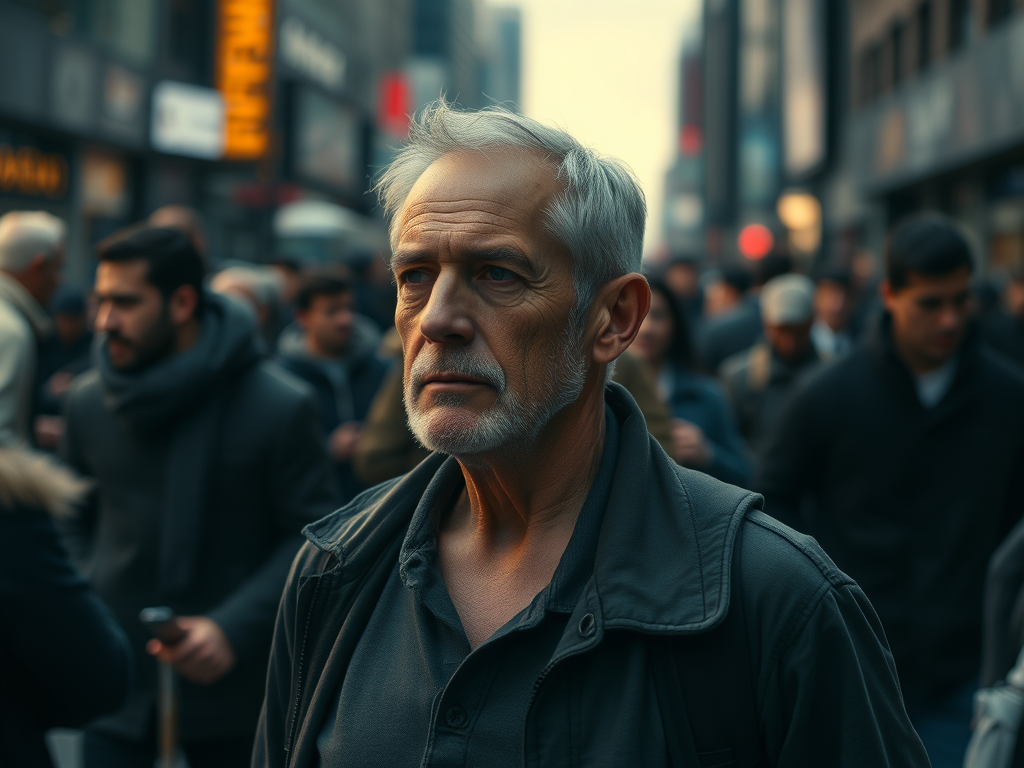
    There’s a peculiar loneliness that comes from seeing the world through a lens no one else seems to share. It’s the kind of solitude where you find yourself surrounded by people yet feel profoundly alone—alone in your convictions, in your principles, and in the battles you’ve chosen to fight. At times, it feels as though the very world is stacked against you, scapegoating you for problems that run far deeper than one individual could ever control.

    I’ve learned that this loneliness takes many forms. In my family, it’s the battle against enabling behaviors that perpetuate cycles of harm—drug addiction, poor spending habits, choices that erode stability and trust. Standing firm against these patterns often makes me the villain in their narrative, the “uncaring” one, the one “out of touch” with what they claim is important. Yet I know, deep down, that enabling isn’t love. It’s a betrayal of the very people we want to help, a trap disguised as compassion.

    Beyond my family, this sense of being out of step extends to the wider world. I live in a place where the air is silent about climate change—silent about the storms that grow fiercer, the forests that shrink, the waters that rise. It’s as though the earth itself is crying out, and yet the people around me refuse to listen. When I speak of it, I’m met with skepticism or dismissal, as if I’m the one who has lost touch with reality.

    This duality—being accused of caring too much in one sphere and being too distant in another—creates a constant, grinding sense of alienation. I feel caught between worlds: one where I’m criticized for holding the line, and another where my concerns are treated as folly.

    At times, I grow tired of the fight. I retreat, exhausted, into myself, questioning why I should even bother. Why hold firm when the world seems to demand compromise at every turn? Why speak the truth when no one wants to hear it? Why care when doing so only makes you the scapegoat?

    And yet, even in these moments of surrender, I find a quiet resolve. Life, I’ve come to believe, isn’t about being understood or praised. It’s about being true—to yourself, to your values, and to the principles you hold sacred. Truth is a slippery thing, shaped by perception and context, but some truths feel immutable. Enabling destruction, whether through addiction, careless habits, or environmental denial, is wrong. It’s a hill I’m willing to stand on, even if I stand there alone.

    So how should one approach life from this perspective? How do you navigate a world that seems blind to what you see so clearly? I’ve found solace in a few guiding principles:

    1. Stand Firm in Your Values

    Even when the world tells you you’re wrong, remember why you chose your path. Not every battle will feel worth fighting, but the ones tied to your core beliefs—those are the battles that define who you are.

    2. Seek Meaning in Solitude

    Isolation, while painful, can also be clarifying. It strips away the noise and forces you to confront the essence of your being. In the quiet, you can hear your own voice more clearly and rediscover your purpose.

    3. Accept What You Cannot Change

    There’s a fine line between persistence and self-destruction. Recognize when to let go, not as an act of defeat, but as an act of self-preservation. Some fights aren’t yours to win.

    4. Channel Your Energy Constructively

    When you feel silenced, find ways to express yourself. Write, create, build—do anything that allows you to transform frustration into something tangible. It’s in the act of creation that we reclaim our agency.

    5. Find Kindred Spirits

    Even in the most isolated corners, there are others who see the world as you do. Seek them out, whether in person or through shared ideas, and find strength in knowing you are not entirely alone.

    Life from this vantage point isn’t easy. It’s often lonely, frustrating, and filled with doubt. But it’s also deeply authentic. And maybe, just maybe, that’s enough. To live in accordance with your truth, no matter how solitary the journey, is to live a life of integrity. In a world that often prizes conformity over conviction, that’s a rare and precious thing.

    So I keep walking my path, uncertain of where it leads but certain of why I’m on it. For me, that’s what life is about—not being understood, not being celebrated, but being unwaveringly true to myself.


  • Protoplasmic Computer

    Protoplasmic Computer

    Imagine this: you reach for a coffee cup, feeling the warmth of the handle as you lift it to your lips. It feels simple, natural. You decided to pick it up. Or did you?

    Science might have something unsettling to say about that. Moments before you consciously thought about lifting the cup, your brain had already sent signals to your muscles to do it. The decision you felt you made? It might just be an afterthought—a story your mind tells you to preserve the illusion of control.

    Let that sink in. The moment you think you’re in control, you’re not. Your body has already acted. What if this isn’t just about picking up a coffee cup? What if everything you do—from falling in love to choosing your career—isn’t really your choice?

    Are You Just Following a Program?

    Consider this: humans function like highly advanced, self-learning computers. We’re born with a basic operating system—our genetic programming—and over time, our experiences update our software. Every interaction, every choice, every failure is logged into our neural network, subtly rewriting how we respond to the world.

    When you decide what to say in a conversation, when to smile, or even what career path to follow, you might think you’re acting independently. But is it really you? Or is it a pre-programmed algorithm, honed by years of inputs and responses, blindly running the show?

    The Science of No Free Will

    The evidence is unnerving. Neuroscientist Benjamin Libet’s famous experiments revealed that brain activity predicting a person’s decision to move occurs before they consciously decide to act. Later studies have confirmed this phenomenon. In some cases, researchers can predict your decisions seconds before you become aware of making them.

    Think about that. The choice to reach for a glass of water, to press the gas pedal, or to call a friend could be predetermined by the neural fireworks in your brain, igniting before you even know it. Your conscious mind is not the pilot; it’s just along for the ride, narrating events it never actually controls.

    A Frenzy of Algorithms

    Strip away the poetry of humanity, and we become a collection of algorithms. Our reptilian brain—the primal core—drives survival instincts: eat, mate, fight, flee. Surrounding that is our mammalian brain, layering emotions and social bonding. And finally, the crown jewel: the neocortex, capable of abstract thought and complex reasoning.

    But even this intricate machinery doesn’t guarantee free will. Instead, it may create the illusion of choice by offering competing algorithms. Should you take a sip of water? One program says yes (hydration is critical). Another says no (the meeting is still going). The outcome? A decision that feels like yours but is, in reality, the winner of an unconscious tug-of-war.

    The Illusion That Binds Us

    If free will is an illusion, why does it exist at all? The answer might be evolutionary. Believing in free will provides a sense of agency and accountability. It allows societies to function, relationships to flourish, and individuals to strive. The illusion is a necessary construct—a psychological tool that grounds us in a seemingly coherent narrative.

    But it’s still just that: an illusion. Every action you take is guided by algorithms seeking to gain pleasure or avoid pain, driven by a lifetime of programming you never chose.

    What About “Choice”?

    Even the moments that feel most deliberate may not be as free as they seem. Think about a time you stopped yourself from saying something hurtful. Was that free will? Or was it another program—the result of learned social norms—intervening? Your frontal cortex, trained by experience, steps in to overwrite the immediate impulse, giving you the illusion of a conscious choice. But is it really you making the decision? Or just another algorithm at work?

    Living in the Machine

    If this all feels disheartening, don’t despair. The illusion of free will can still be empowering. Knowing that we’re products of programming doesn’t mean we’re powerless. Our “software” is constantly updating. Every book you read, every conversation you have, every challenge you face adds to your algorithm, refining how you navigate the world.

    Even if your choices are predetermined, you can still shape your programming. Feed your mind with new ideas. Surround yourself with people who challenge you. Engage in experiences that push you beyond your comfort zone. These actions may not be as “free” as they feel, but they’re how you influence the machine.

    The Final Question

    So, do we have free will? Maybe not in the way we’ve always believed. But does it matter? Perhaps the real question isn’t whether we’re free, but what we’ll do with the illusion we’re given.

    And here’s the most profound twist: even reading this post, questioning your autonomy, and grappling with these ideas might just be another part of your program. Yet, in this moment, it feels like you’re choosing to think deeper. Isn’t that enough?

  • Nature’s Dark Side

    Nature’s Dark Side

    Humanity is at a crossroads, but perhaps not in the way we often think. Climate change, economic inequality, displacement, and the rise of nationalism are not simply crises we face—they are symptoms of something deeper. They reveal the nature of humanity itself: a collective organism, moving like a flock of birds or a school of fish, responding instinctively to unseen forces, unaware of the consequences but inexorably driven toward what comes next.

    Despite the warnings, despite the data, despite the catastrophic evidence unfolding before us, humanity continues its relentless march. We drill deeper, exploit more, and consume endlessly. To an observer, this behavior might seem self-destructive—an irrational denial of reality. But denial suggests ignorance or avoidance. What if, instead, this is simply human nature in action?

    The Collective Mind of Humanity

    When a flock of birds takes flight or a herd of animals changes direction, there is no leader, no conscious decision-making. Each individual reacts to the movements of those around it, creating an emergent order that appears purposeful but is devoid of individual intent.

    Humanity operates in much the same way. Our decisions—to drill, to build, to fortify, to isolate—are not random, nor are they fully rational. They are driven by deep, instinctual forces: the need for self-preservation, the fear of scarcity, and the tribal impulse to protect one’s own at the expense of others. Individually, we may not grasp the full implications of our actions. But collectively, we are preparing for what is coming.

    The Signs of Preparation

    The signs are everywhere. Around the world, nations are hardening their borders and turning inward. Nationalism is rising, not as an accident of politics but as a reflection of humanity’s instinct to protect itself from perceived threats. Populations displaced by climate change—whether through rising seas, droughts, or natural disasters—become the “other,” scapegoated as a danger to stability.

    The United States, under figures like Donald Trump, epitomizes this trend. Walls are built, immigration is curtailed, and entire groups of people—Muslims, refugees, the poor—are cast as threats. This is not unique to the U.S.; it is a global phenomenon. The wealthy consolidate their resources, retreating into fortified enclaves. Private bunkers, off-grid estates, and secretive wealth accumulation are not eccentricities—they are strategies of survival.

    Meanwhile, the systems we depend on—capitalism, global trade, technological innovation—march forward, seemingly impervious to the warnings of collapse. But this too is part of the preparation. Capitalism thrives on inequality, concentrating power and resources into the hands of a few, ensuring that when the unraveling comes, those at the top will have the means to endure. The rest of humanity, left behind, becomes expendable.

    Nature’s Design in Our Actions

    This behavior is not the result of a conspiracy or deliberate malice. It is simply what humans do. Like ants building a nest or birds migrating for the winter, we are acting out the impulses coded into our nature. Our desires—for security, for status, for survival—are not inherently good or evil. They are the mechanisms by which humanity has always adapted to a changing world.

    But adaptation does not mean avoiding catastrophe. It means enduring it. The dark future humanity is preparing for—scarcity, conflict, and collapse—is not an aberration but an extension of the natural order. We are not separate from nature; we are its leading edge. And in this moment, the edge is razor-sharp.

    The Unseen Understanding

    What is most remarkable—and most chilling—is how unconscious this preparation is. Few would say they are actively readying themselves for a future of displacement, fortresses, and conflict. Yet our actions betray us. The fortifications, the walls, the divisions, the hoarding—these are not anomalies. They are the logical outcomes of a species responding to its environment.

    We do not need to acknowledge what is happening to act upon it. Just as a flock of birds instinctively veers away from danger, humanity collectively senses what is coming. And like the birds, we do not stop to question or comprehend. We move, we build, we protect. The fact that these actions often worsen the crisis—deepening inequality, accelerating climate change, creating more displacement—only reinforces the point. This is not rational planning; it is instinct.

    The Dark Horizon

    There is no comfort in this conclusion. If humanity is indeed following its nature, then the trajectory we are on is almost unavoidable. The preparation for scarcity, for collapse, for conflict—it is already underway. And like the birds in flight, we cannot see the whole of the pattern while we are within it.

    Perhaps, years from now, historians will look back and see this moment as a turning point. They will note how humanity, facing its greatest challenges, acted not with foresight but with instinct. They will trace the rising walls, the fortified bunkers, the shifting borders, and the scapegoating of the vulnerable. And they will see in it all the story of a species moving as one, collectively cognizant yet individually unaware, preparing for the dark horizon that it cannot avoid.


  • Life Crept

    Life Crept

    Life crept, life stung, life blossomed. These three simple phrases capture the arc of so many journeys—including my own.

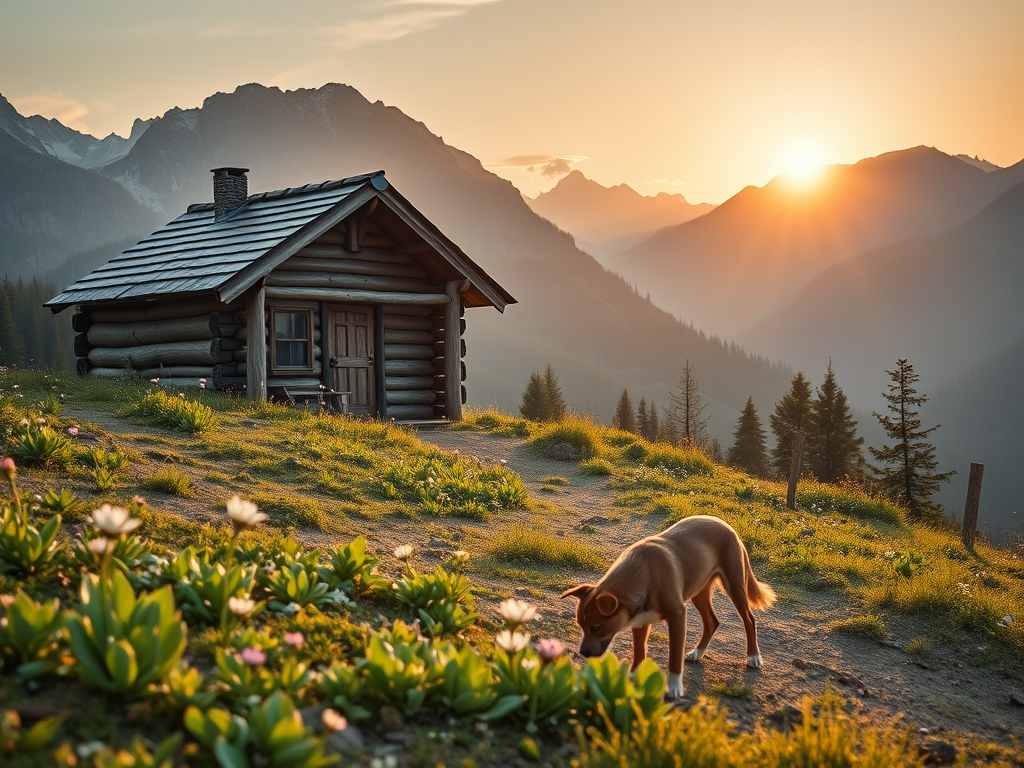
    When I first moved to the mountains, life crept. Days unfolded quietly, almost imperceptibly, like the first green shoots breaking through the soil in spring. My routine was simple: rebuild the cabin, take long walks with my dog, Tsali, and try to shake the feeling that I had left something behind. There was no rush, no urgent deadlines. Just the slow, steady rhythm of work and nature. At times, it felt like nothing was happening—like I was stuck in neutral—but life was stirring under the surface, unseen.

    Then, life stung. Challenges I hadn’t anticipated reared their heads. A hurricane tore through the region, threatening the work I had poured so much of myself into. My body ached from days of labor, and self-doubt buzzed in my mind like an unwelcome swarm. What was I doing out here, far from the comforts and recognition of my old life? Was this really the path I wanted? The sting of those questions lingered, sharp and persistent. They forced me to confront truths I’d been avoiding, about what I valued and why I had chosen this solitary, unconventional road.

    And then, life blossomed. Not in an earth-shaking, triumphant way, but quietly, like wildflowers scattered across a meadow. The cabin began to feel like home—not just a project. Mornings with Tsali became a source of peace rather than routine. The sting of doubt faded, replaced by a growing confidence that this life, however imperfect, was mine. I started to see beauty in the small victories: a fence repaired, a day’s work done, a breathtaking sunset shared only with the mountains and my loyal dog.

    Life crept, life stung, life blossomed. It’s a cycle I’ve learned to embrace. Each phase has its place—the slow beginnings, the painful lessons, and the moments of quiet triumph. If you’re in the creeping stage, unsure if things will ever change, know that they will. If you’re in the stinging stage, overwhelmed by setbacks or self-doubt, trust that it’s preparing you for something new. And if you’re in the blossoming stage, take a moment to savor it, because it’s fleeting—and all the more precious for that.

    So here I am, sharing this with you. Not because I have it all figured out, but because I’m learning, one day at a time. Life will keep creeping, stinging, and blossoming. And I’ll keep walking through it, step by step, grateful for the journey.

  • Estranged Yet Connected

    Estranged Yet Connected

    This morning, I awaken to the weight of estrangement—a sense of being a stranger in my own house, a wanderer among the ruins of a world I scarcely recognize. Society churns on, restless and relentless, shaping lives into patterns I no longer understand. Yet amidst this disquiet, I am drawn toward something undeniable. Today, I will hold my grandson, George, for the third time.

    It’s a simple act, holding him, but in his tiny frame lies something transformative. His breath, soft and even, seems to echo with the rhythm of life itself. His hand, grasping mine with surprising strength, pulls me into a quiet clarity. In his presence, I see not only the hope of a new beginning but the thread that binds generations together. The world’s chaos fades, and in that moment, he becomes the still point around which life turns.

    And yet, the enormity of it weighs on me. What kind of world will he inherit? The forests that once stretched untamed are now shattered. Ninety-five percent of mammalian life has been domesticated—a staggering fact that tells of a wildness erased, a freedom exchanged for the convenience of control. George will grow into a world shaped by these choices, and I can only hope he finds a way to be a builder, not a destroyer—a steward of light in a dimming existence.

    I think back to my own life, to the heady rush of ambition that once defined me. Like so many, I pursued wealth, power, and the illusion of permanence, building my own small kingdoms in the world. At the time, it felt purposeful, even noble. But now, standing on the other side of that pursuit, I see it for what it was—a relentless chase for something that could never satisfy.

    Now, as I hold George, I feel the truth of life narrowing into focus. It is not about the monuments we build or the wealth we amass but about the connections we nurture and the legacy of meaning we leave behind. For so long, I thought the world could be shaped and tamed by force of will. I see now that it cannot. The power to change is small, incremental—born in moments like this, when I hold him and feel the weight of hope for the future.

    The vigor of my youth has faded, and with it, the desire to conquer. What remains is a quiet peace, born of understanding my place in the greater story. I cannot change the destruction of this world, nor can I reclaim the wildness we’ve lost. But I can reflect. I can bear witness. And I can hope that George grows to be a builder, one who lights the way for others in the dark.

    These are not joyous thoughts, but they are grounding. In the end, it is not kingdoms or wealth that matter, but the moments of connection and the light we leave behind. Perhaps this is the purpose of these words—not to change the world, but to illuminate its fragile beauty, to mark the passage of time with something enduring.

    As I hold George, I feel it again—the quiet transformation of purpose. The world remains chaotic, but for a moment, it all makes sense.