Category: Uncategorized

  • Protoplasmic Computer

    Protoplasmic Computer

    Imagine this: you reach for a coffee cup, feeling the warmth of the handle as you lift it to your lips. It feels simple, natural. You decided to pick it up. Or did you?

    Science might have something unsettling to say about that. Moments before you consciously thought about lifting the cup, your brain had already sent signals to your muscles to do it. The decision you felt you made? It might just be an afterthought—a story your mind tells you to preserve the illusion of control.

    Let that sink in. The moment you think you’re in control, you’re not. Your body has already acted. What if this isn’t just about picking up a coffee cup? What if everything you do—from falling in love to choosing your career—isn’t really your choice?

    Are You Just Following a Program?

    Consider this: humans function like highly advanced, self-learning computers. We’re born with a basic operating system—our genetic programming—and over time, our experiences update our software. Every interaction, every choice, every failure is logged into our neural network, subtly rewriting how we respond to the world.

    When you decide what to say in a conversation, when to smile, or even what career path to follow, you might think you’re acting independently. But is it really you? Or is it a pre-programmed algorithm, honed by years of inputs and responses, blindly running the show?

    The Science of No Free Will

    The evidence is unnerving. Neuroscientist Benjamin Libet’s famous experiments revealed that brain activity predicting a person’s decision to move occurs before they consciously decide to act. Later studies have confirmed this phenomenon. In some cases, researchers can predict your decisions seconds before you become aware of making them.

    Think about that. The choice to reach for a glass of water, to press the gas pedal, or to call a friend could be predetermined by the neural fireworks in your brain, igniting before you even know it. Your conscious mind is not the pilot; it’s just along for the ride, narrating events it never actually controls.

    A Frenzy of Algorithms

    Strip away the poetry of humanity, and we become a collection of algorithms. Our reptilian brain—the primal core—drives survival instincts: eat, mate, fight, flee. Surrounding that is our mammalian brain, layering emotions and social bonding. And finally, the crown jewel: the neocortex, capable of abstract thought and complex reasoning.

    But even this intricate machinery doesn’t guarantee free will. Instead, it may create the illusion of choice by offering competing algorithms. Should you take a sip of water? One program says yes (hydration is critical). Another says no (the meeting is still going). The outcome? A decision that feels like yours but is, in reality, the winner of an unconscious tug-of-war.

    The Illusion That Binds Us

    If free will is an illusion, why does it exist at all? The answer might be evolutionary. Believing in free will provides a sense of agency and accountability. It allows societies to function, relationships to flourish, and individuals to strive. The illusion is a necessary construct—a psychological tool that grounds us in a seemingly coherent narrative.

    But it’s still just that: an illusion. Every action you take is guided by algorithms seeking to gain pleasure or avoid pain, driven by a lifetime of programming you never chose.

    What About “Choice”?

    Even the moments that feel most deliberate may not be as free as they seem. Think about a time you stopped yourself from saying something hurtful. Was that free will? Or was it another program—the result of learned social norms—intervening? Your frontal cortex, trained by experience, steps in to overwrite the immediate impulse, giving you the illusion of a conscious choice. But is it really you making the decision? Or just another algorithm at work?

    Living in the Machine

    If this all feels disheartening, don’t despair. The illusion of free will can still be empowering. Knowing that we’re products of programming doesn’t mean we’re powerless. Our “software” is constantly updating. Every book you read, every conversation you have, every challenge you face adds to your algorithm, refining how you navigate the world.

    Even if your choices are predetermined, you can still shape your programming. Feed your mind with new ideas. Surround yourself with people who challenge you. Engage in experiences that push you beyond your comfort zone. These actions may not be as “free” as they feel, but they’re how you influence the machine.

    The Final Question

    So, do we have free will? Maybe not in the way we’ve always believed. But does it matter? Perhaps the real question isn’t whether we’re free, but what we’ll do with the illusion we’re given.

    And here’s the most profound twist: even reading this post, questioning your autonomy, and grappling with these ideas might just be another part of your program. Yet, in this moment, it feels like you’re choosing to think deeper. Isn’t that enough?
  • Life Crept

    Life Crept

    Life crept, life stung, life blossomed. These three simple phrases capture the arc of so many journeys—including my own.

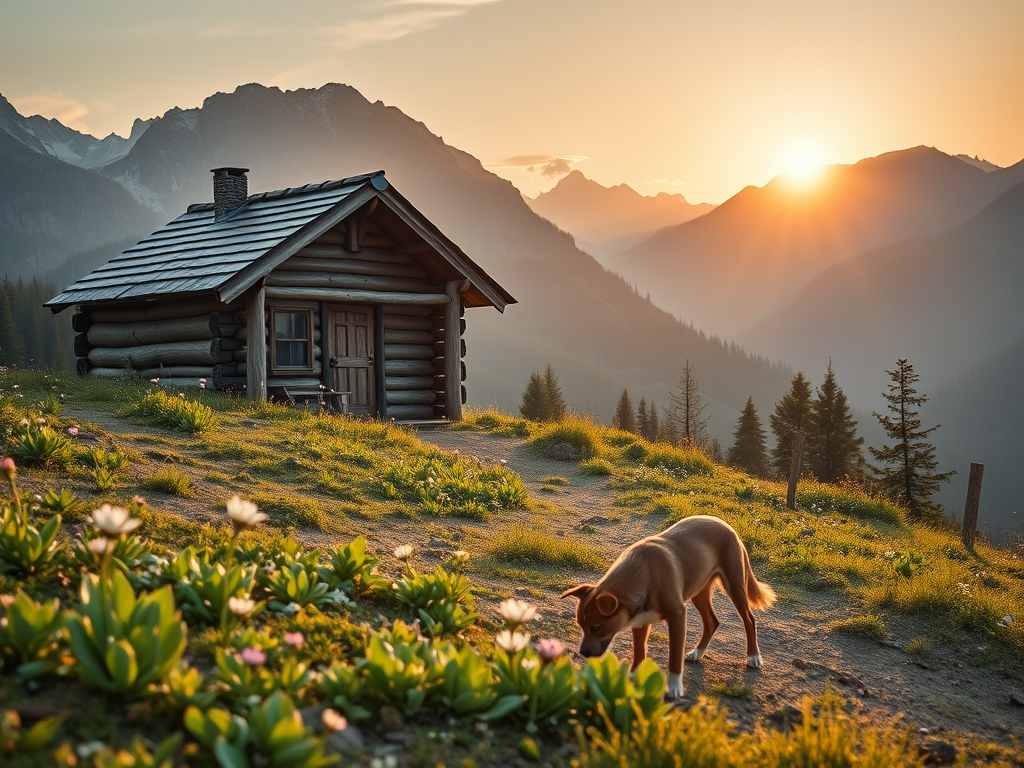
    When I first moved to the mountains, life crept. Days unfolded quietly, almost imperceptibly, like the first green shoots breaking through the soil in spring. My routine was simple: rebuild the cabin, take long walks with my dog, Tsali, and try to shake the feeling that I had left something behind. There was no rush, no urgent deadlines. Just the slow, steady rhythm of work and nature. At times, it felt like nothing was happening—like I was stuck in neutral—but life was stirring under the surface, unseen.

    Then, life stung. Challenges I hadn’t anticipated reared their heads. A hurricane tore through the region, threatening the work I had poured so much of myself into. My body ached from days of labor, and self-doubt buzzed in my mind like an unwelcome swarm. What was I doing out here, far from the comforts and recognition of my old life? Was this really the path I wanted? The sting of those questions lingered, sharp and persistent. They forced me to confront truths I’d been avoiding, about what I valued and why I had chosen this solitary, unconventional road.

    And then, life blossomed. Not in an earth-shaking, triumphant way, but quietly, like wildflowers scattered across a meadow. The cabin began to feel like home—not just a project. Mornings with Tsali became a source of peace rather than routine. The sting of doubt faded, replaced by a growing confidence that this life, however imperfect, was mine. I started to see beauty in the small victories: a fence repaired, a day’s work done, a breathtaking sunset shared only with the mountains and my loyal dog.

    Life crept, life stung, life blossomed. It’s a cycle I’ve learned to embrace. Each phase has its place—the slow beginnings, the painful lessons, and the moments of quiet triumph. If you’re in the creeping stage, unsure if things will ever change, know that they will. If you’re in the stinging stage, overwhelmed by setbacks or self-doubt, trust that it’s preparing you for something new. And if you’re in the blossoming stage, take a moment to savor it, because it’s fleeting—and all the more precious for that.

    So here I am, sharing this with you. Not because I have it all figured out, but because I’m learning, one day at a time. Life will keep creeping, stinging, and blossoming. And I’ll keep walking through it, step by step, grateful for the journey.

  • Estranged Yet Connected

    Estranged Yet Connected

    This morning, I awaken to the weight of estrangement—a sense of being a stranger in my own house, a wanderer among the ruins of a world I scarcely recognize. Society churns on, restless and relentless, shaping lives into patterns I no longer understand. Yet amidst this disquiet, I am drawn toward something undeniable. Today, I will hold my grandson, George, for the third time.

    It’s a simple act, holding him, but in his tiny frame lies something transformative. His breath, soft and even, seems to echo with the rhythm of life itself. His hand, grasping mine with surprising strength, pulls me into a quiet clarity. In his presence, I see not only the hope of a new beginning but the thread that binds generations together. The world’s chaos fades, and in that moment, he becomes the still point around which life turns.

    And yet, the enormity of it weighs on me. What kind of world will he inherit? The forests that once stretched untamed are now shattered. Ninety-five percent of mammalian life has been domesticated—a staggering fact that tells of a wildness erased, a freedom exchanged for the convenience of control. George will grow into a world shaped by these choices, and I can only hope he finds a way to be a builder, not a destroyer—a steward of light in a dimming existence.

    I think back to my own life, to the heady rush of ambition that once defined me. Like so many, I pursued wealth, power, and the illusion of permanence, building my own small kingdoms in the world. At the time, it felt purposeful, even noble. But now, standing on the other side of that pursuit, I see it for what it was—a relentless chase for something that could never satisfy.

    Now, as I hold George, I feel the truth of life narrowing into focus. It is not about the monuments we build or the wealth we amass but about the connections we nurture and the legacy of meaning we leave behind. For so long, I thought the world could be shaped and tamed by force of will. I see now that it cannot. The power to change is small, incremental—born in moments like this, when I hold him and feel the weight of hope for the future.

    The vigor of my youth has faded, and with it, the desire to conquer. What remains is a quiet peace, born of understanding my place in the greater story. I cannot change the destruction of this world, nor can I reclaim the wildness we’ve lost. But I can reflect. I can bear witness. And I can hope that George grows to be a builder, one who lights the way for others in the dark.

    These are not joyous thoughts, but they are grounding. In the end, it is not kingdoms or wealth that matter, but the moments of connection and the light we leave behind. Perhaps this is the purpose of these words—not to change the world, but to illuminate its fragile beauty, to mark the passage of time with something enduring.

    As I hold George, I feel it again—the quiet transformation of purpose. The world remains chaotic, but for a moment, it all makes sense.

  • Christmas Morning: A Quiet Reckoning

    Christmas Morning: A Quiet Reckoning

    It is Christmas morning, and the house is still, save for the rhythmic breath of the dogs at my feet. Outside, the gray light of winter filters through the trees, and the world feels muted, waiting. This day, so saturated with expectation and joy for others, leaves me grappling with the peculiar unease of my own path.

    I am aging. The lines on my face are deeper, the ache in my knees more persistent. At seventy-something, I am caught in the space between what was and what remains. Regrets, they say, are a wasted indulgence, but they are here with me, as tangible as the weight of the mug in my hand. I question the choices I’ve made, the routes I’ve taken, and those I’ve left unexplored.

    My neighbor stopped by yesterday, his words tumbling with excitement about his latest adventures—a trip to the Amazon followed by Alaska. His stories of cruises and luxury, of fulfilling the rites of the well-to-do retiree, left me hollow and a little envious. Not of the destinations themselves, perhaps, but of the simplicity in which he occupies his role in the machinery of our culture. He travels, consumes, and revels, and the world celebrates him for it.

    And here I am, at my cabin in the woods, mending, painting, shaping logs into walls that no one will likely admire. My days are marked by the thud of a hammer, the scratch of pen on paper, and the flicker of videos I start but never complete. I am in limbo—caught between the impulses of a life lived for others and the quiet conviction of living for the earth.

    This is not a world that rewards restraint. It celebrates excess. The ships that take my neighbor to the edges of the world burn rivers of fuel; the planes that lift him to his next adventure carve scars into the sky. And yet, there is a part of me—a small, gnawing part—that wonders if I am the fool for sitting here. The side of me that craves the fine clothes, the glossy itineraries, the Instagram-worthy meals on distant shores whispers that I am missing out. That I am wasting my twilight years in a self-imposed exile.

    But I cannot shake the truth that these indulgences come at a cost. The earth cannot bear the weight of these pleasures much longer. It groans under the strain, splintering into storms and fires. The opulence we grasp at in our final chapters is killing the very stage upon which we live. And I—I have bound myself to this truth, however isolating it may be.

    Christmas is an odd thing for a man like me. I don’t believe in God, not anymore, but I cannot escape the inertia of traditions drilled into me since childhood. The lights, the gifts, the bumper-to-bumper traffic—all of it feels like a pageant I cannot quite bring myself to abandon. The rituals soothe even as they exhaust. I am human, after all, and bound to this life, absurd and fleeting as it may be.

    I think, sometimes, about my grandfather. He lay dying of pancreatic cancer, his voice frail yet sharp enough to deliver one last wish: that I could be more like him. I was a quiet boy then, introverted and unsure, and his words pierced me in a way I’ve never quite recovered from. Decades later, I am still that quiet boy, reshaped by time but not transformed. The world, now louder than ever, has little patience for men like me.

    I want to speak, to be heard. I want to stand against the tide of unbridled consumption, to say something profound about the path we are on. But the words stick, and the courage falters. It feels like a joke, the idea that I could spread any message in a world so saturated with noise. My quiet voice in this cacophony feels like a whisper in a hurricane.

    And yet, I try. Perhaps that is all we can do—try. To live honestly, to wrestle with the contradictions of our desires and our convictions, to carve out meaning where we can. The dogs stir, reminding me that life, for all its weight, is still happening. I will walk them soon, through the woods, beneath the bare trees. The morning will pass, and another day will begin.

    I am a quiet man, building a quiet life, in a world that does not value quiet things. And perhaps that is enough. For now, it has to be.

  • The Courage to See Beyond the Machine

    The Courage to See Beyond the Machine

    As the world shifts once again, with Trump poised to take office, the forces driving our society into deeper inequity and environmental collapse intensify. Tariffs that claim to protect American industry will drive up costs, fueling inflation. And while this may shrink the national debt relatively—as a dollar owed diminishes in significance compared to a dollar earned—the cost to the disenfranchised will be profound. Those already struggling will find themselves weaker, more marginalized, while wealth becomes ever more concentrated at the apex of power.

    This is the nature of unbridled growth. It thrives on the illusion that all boats rise with the tide. But what it truly does is feed the few while leaving the many adrift, clawing to stay afloat in a system designed to prioritize profit over people. And yet, many of us remain complicit—not because we do not see, but because we lack the courage to face what that truth demands of us.

    The truth is stark: the pursuit of more—more wealth, more power, more convenience—is hollow. It feeds a machine that is devouring the earth and fracturing humanity. Those who profit from this system will not save us; they will not even save the system itself. They will simply extract until there is nothing left to extract. And those of us who sustain the system, whether through ambition, consumption, or denial, will be left with its ruins.

    We all feel the pull of this machine. We chase its promises of safety, success, and recognition because beneath it lies a primal fear: that if we stop running, we will fall into our worst nightmares—poverty, insignificance, irrelevance. But this is the trap. It is fear that keeps us blind, that makes us unwilling to step back and question the very system that drives these fears.

    What Trump’s policies highlight is not just the fragility of our economy but the fragility of our collective courage. His pursuit of deregulation, his drive for economic expansion at any cost, reveals a world clinging desperately to a myth of endless growth. But growth for the sake of growth is the ideology of a cancer cell, not a sustainable society. And the more we feed this ideology, the weaker the most vulnerable among us become, while the wealth of the few is refined to a sharper and more unreachable pinnacle.

    The answer to this is not more ambition. It is not in fighting the machine head-on, hoping to dismantle a system too vast for any one of us to conquer. The answer lies in stepping away. It lies in finding the courage to see the truth—that the life we are chasing is feeding the very outcomes we fear. It lies in choosing to live differently, not in opposition to the world, but in harmony with it.

    This choice is not glamorous. It is not easy. It requires us to reject the comforts and illusions that have defined our lives. But in that rejection, there is freedom. In stepping away from the machine, we reclaim a life that is meaningful not because of what we consume or produce, but because of how we exist.

    As Trump takes office, many will celebrate the promises of growth and prosperity, blind to the cost. Many will continue chasing what they believe will save them, unwilling to see that their participation is what sustains the machine. But there is another way—a quieter, more courageous way. It is the choice to stop chasing, to stop fearing, and to start living in accordance with the truth we see.

    We cannot save the world alone. But we can choose how we live within it. We can choose to stop feeding the machine. And in that choice, we can find a significance that no wealth or power can provide—a life of integrity, courage, and harmony with the world as it is, not as we wish it to be.

    The machine will continue, devouring all it touches. But we do not have to be its fuel. We can step away, not out of defeat, but out of wisdom. To see the truth and live it—that is the courage the world needs now.

  • A simple day

    A simple day

    The light of dawn crept across the lake, a reluctant gift of gold and gray. The water, smooth as glass, mirrored the mist that clung to it like an uncertain spirit. This was no grand awakening, no triumphant blaze of glory—just the quiet persistence of another day. I stood at the window, coffee in hand, the bitter warmth tethering me to the moment. The house groaned softly in the stillness, and Tsali’s tail thumped against the wall with the measured cadence of expectation.

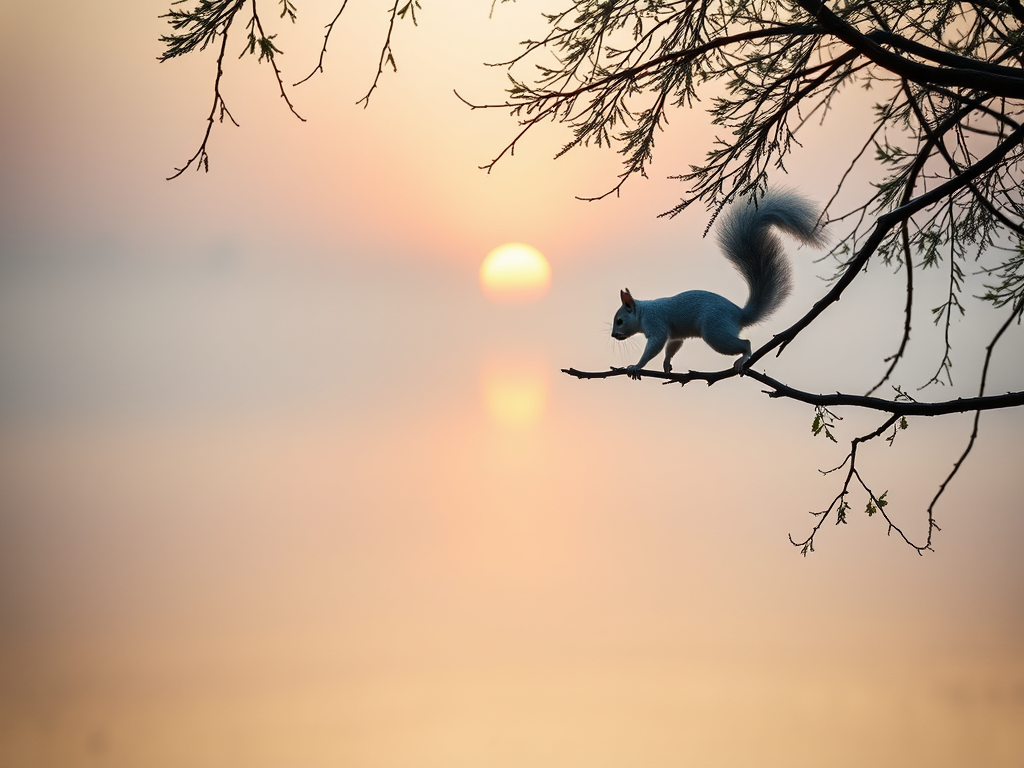
    Outside, an albino squirrel darted across the yard, its arched tail stark against the muted palette of the morning. It seemed to mock my pondering, a fleeting phantom that left no trace. The world was indifferent, and yet I found myself compelled to witness it, to acknowledge its quiet existence.

    Life here is stripped bare of pretense, reduced to the elemental. My mornings begin with the churn of the bike, an hour spent cycling virtual roads that unfold before me like dreams of a journey never taken. Each turn of the pedals is a rebellion against the inertia of age, a quiet refusal to fade into the obscurity of disuse. The sweat, the strain—these are my acts of defiance.

    Later, I face the iron. On the deck overlooking the lake, I lift the barbell, its weight a deliberate challenge to gravity and time. The heron glides across the water, its wings cutting through the mist with an elegance I can never hope to mimic. Yet, I find solace in the effort, the grounding rhythm of exertion. The heron does not toil, but I must. It is the price of existence.

    Tsali waits for me by the door, leash in mouth, his gaze steady and expectant. We walk the trail that circles the lake, the crunch of leaves beneath our feet a reminder of decay and renewal. The water beside us flows toward the Gulf, its journey inexorable, its purpose undefined. I think of hurricanes, of storms born from the heat we’ve poured into the oceans. The world churns in chaos, yet here I am, walking a quiet path, my resistance small but resolute.

    Back at the house, I sit at my desk, the lake a silent companion framed by the window. The blank screen stares back, demanding purpose. I write—not for fame, not for recognition, but because the act itself feels like an answer to the question the day has posed. I write of herons and mist, of labor and silence, of the strange beauty that exists in the margins of life. These words are my offering, fragile and fleeting as the morning mist.

    As the sun dips low, I find myself on the dock, Tsali by my side. The lake darkens, its surface swallowing the light, and the first stars puncture the sky’s fragile veil. The world is vast, its chaos and fragility a weight I cannot lift. My life, a drop in the ocean, is insignificant. And yet, it is mine. Each day I live simply, intentionally, I claim a small victory against the void.

    “Another day, another chance,” I murmur, my voice lost to the gentle lap of the water against the shore. Tsali sighs, his trust unwavering. The lake’s rhythm echoes in my chest, a quiet pulse that tells me to go on.

    This life is not a conquest. It is not a triumph. It is a passage, marked by moments that demand witness. And for now, it is enough.

  • The Way

    The Way

    I’ve felt the pull of competing paths for much of my life. On one side, there’s the road that many of us are taught to follow—a relentless drive to climb higher, do more, and build a life that can be measured and admired. We pile up our trophies, whether they’re homes, cars, promotions, or achievements, hoping they will fill some inner void. But this road often feels like a treadmill that never stops, leaving us tired, empty, and wondering what we’re chasing.

    On the other side lies a quieter way that doesn’t scream for attention or demand. We run faster. It’s like a river winding through a forest, flowing naturally, taking its time. This way of being doesn’t ask us to keep up with anyone else. Instead, it invites us to slow down and notice the beauty of simply being—to feel the breeze, hear the rustle of leaves, and sink into the rhythm of life as it is.

    I’ve come to believe that true meaning isn’t found in the skyscrapers we build or the accolades we collect. It’s found in the things we create from the deepest part of who we are. Whether it’s a garden we tend, a meal we cook, or a story we tell, these acts of creation are what connect us to something bigger. They aren’t about proving ourselves or keeping score. They’re about finding joy in the doing, about pouring a piece of our soul into the world.

    When we create, we remind ourselves that life isn’t about racing to the finish line. It’s about the moments we lose ourselves in something real and true. The endless chase for more stuff, approval, and status often makes us feel emptier than when we started. But when we create with intention, we step off the treadmill and into a space where life feels full, even in its simplest forms.

    This is the path I’ve chosen, and it’s one I keep walking—not perfectly, but with a growing sense of clarity. To create not for applause but for the love of creating itself is, I think, the way to a life that feels whole and meaningful.

  • Back Waters

    There’s a strange irony to life when you find yourself surrounded by abundance but still feeling out of place. Maybe you’ve thought it, too—that sense of standing on the sidelines of a world that doesn’t quite understand you. It’s not exactly dissatisfaction but a quiet realization that you live on a different frequency than those around you. This has meant embracing a life of simplicity and labor, even as others pursue the gleam of success and sophistication.

    I live in a neighborhood where I don’t seem to fit. The people here admire newness, grandeur, and perfection—things I’ve learned to let go of. My home, with its weathered brick wall and unpolished charm, reflects my chosen life. To some, it may seem like a lesser existence, but to me, it’s deliberate. I’ve built a life of reflection, physical effort, and connection with the natural world. Yet, despite this intention, I sometimes wrestle with the judgments of others and the occasional pang of wanting more.

    Each day begins with small rituals—a walk with my dog, a cup of coffee, and time spent working with my hands. Something is grounding about these acts, fixing what’s broken and tending to what endures. Still, I often wonder if this path, with all its solitude and obscurity, is enough. I write repair and labor but question what it all adds to. Am I building something meaningful, or am I simply passing the time?

    Lately, I’ve been drawn to the idea of sharing my story, not for fame or recognition but as a way to connect. It’s not easy to put yourself out there, to risk judgment, and to admit you’re still figuring things out. But maybe that’s where the real power lies—in being vulnerable enough to say, “Here I am. This is my life.”

    I think about how others might see me: a man of advancing years, living a quiet, unremarkable life. But that’s not how I see myself. I see someone trying to press forward despite the doubts to create something that resonates, even if it’s just with one person. My story isn’t polished or perfect. It’s built brick by brick, like the wall outside my home, and maybe that’s the point. Life isn’t about grand gestures or instant success. It’s about showing up daily, doing the work, and finding meaning.

    If you’ve ever felt out of step with the world, know that you’re not alone. We all wrestle with contradictions—the tension between wanting to be seen and fearing the gaze of others, between striving for something more significant and learning to appreciate what we have. The important thing is to keep moving forward, even when the path isn’t clear. Whether it’s through writing, creating, or simply being present, there’s value in the effort.

    So, this is where I’m starting: by sharing my story, imperfect as it is. It’s a small step, but it’s a step nonetheless. If you’re reading this, maybe it’s a reminder to take your own step forward. After all, life isn’t about waiting for the perfect moment—it’s about making the most of the one you have.

  • Courage to get undone!

    The fragility of life is a timeless theme that has been explored in literature for centuries. It is something that speaks to our mortality and the brevity of our existence in this world. Yet, at the same time, it also speaks to our strength and resilience as human beings.

    I believe that having the courage to face the truth is more critical now than ever before. We seem to have a collective agreement to remain in denial of our reality, simply because it is easier than really facing what is true. The consequence of this is that the world has become more complex, and we have failed to take key steps towards positive advancement and prosperity for all. Only when we are brave enough to confront the truth can we take substantial steps towards a better future. Acknowledging the truths about environmental destruction and climate change is a difficult but neccessary step in order for us to be able put an end to this chaos, and bring about real lasting change. Although it may be scary to face these harsh realities, it ultimately gives us the opportunity to shift these conditions for the better in ways that were previously unimaginable.