Category: Climate Change

  • Living Truthfully: Healing in the Face of Dystopia

    Living Truthfully: Healing in the Face of Dystopia

    From the heights of material excess to the quiet solitude of a log cabin in the Nantahala Gorge, I’ve watched America’s descent into what feels like a series of overlapping dystopias, each one folding into the next like origami crafted from pages of yesterday’s promises. Once, I was the archetypal success story: a physician with three houses scattered like autumn leaves across the landscape, Mercedes gleaming in driveways like chrome-plated promises, motorcycles crouching in garages like metallic panthers, and a private plane that sliced through clouds as carelessly as a scalpel through flesh, each ascent burning fuel like I burned through the years, climbing higher while my soul sank lower. I was living the dream—or so I thought—until the dream began to crack, revealing the nightmare of our collective unconsciousness beneath.

    The first fracture came through an unlikely source: Pete Buttigieg’s 2016 campaign speeches on climate change. His words led me to Wells’ “The Uninhabitable Earth,” a book that became my personal apocalypse. I read it twice, then listened to it again as an audiobook, each passage burning deeper into my consciousness like acid etching truth into metal. Each page turned over another damning piece of evidence against our collective way of life, until the weight of knowledge became a burden too heavy to carry in silence. Here I was, a healer by profession, unknowingly contributing to the very forces threatening humanity’s survival, each flight leaving contrails of carbon across the sky like sutures on the atmosphere’s wounded skin.

    The revelation sent me spiraling into a crisis of conscience that opened up beneath me like a sinkhole in seemingly solid ground. Each page of Wells’ book became another brick in a wall between me and my peers, isolating me in a fortress of uncomfortable knowledge. How many carbon-heavy flights had I taken simply because I could? How many resources had I consumed in maintaining multiple homes that stood empty most of the year, like mausoleums to excess? The weight of this realization became unbearable, like carrying a terminal diagnosis I couldn’t unsee.

    In my awakening, I found myself suddenly alien among my peers, like a man who could see infrared in a world of the colorblind. I tried to speak of the coming catastrophe, but my words fell into conversations like stones into deep wells, making tiny splashes before being swallowed by the darkness of indifference. At cocktail parties, my concerns about climate change cleared rooms faster than a fire alarm, leaving me standing alone with my untouched martini, watching others drift away like leaves before an autumn wind.

    The isolation grew like kudzu over my former life. Each passing jet overhead became a personal affront, every neighbor’s new SUV a fresh wound. The world around me continued its dance of consumption, an endless waltz of acquisition and disposal, while I stood frozen in my newfound awareness, like a man who’d suddenly noticed that everyone around him was sleepwalking toward a cliff.

    So I did what any good physician would do when confronting a malignancy: I cut it out. The houses went first, then the cars, the plane—all the trappings of success I’d accumulated like medical credentials after my name. I retreated to a log cabin in the Nantahala Gorge, trading luxury for simplicity, excess for essence. But the loneliness followed me here, as persistent as mountain fog, seeping through the cracks of my newfound sanctuary.

    In my self-imposed exile, I learned to cultivate a peculiar kind of peace with my outrage. Like a monk tending a garden of bitter herbs, I learned to transform my desperation into a kind of meditative practice. The roar of passing trucks on distant highways became my meditation bell, each rumble a reminder of the world I’d left behind, a world still rushing headlong toward its own immolation.

    Then came the pandemic, sweeping across our society like a fever through a weakened body. I watched in horror as my profession—medicine itself—became a battlefield strewn with the casualties of willful ignorance. Colleagues who fought to save lives through vaccination were branded as conspirators, their white coats suddenly marking them as targets rather than healers. Scientific evidence was dismissed as easily as yesterday’s newspaper, crumpled and tossed aside in favor of whatever truth felt most comfortable, like choosing painkillers over proper treatment. The virus exposed our collective madness like an X-ray reveals hidden fractures, but unlike a typical diagnostic image, this one showed breaks in our very social fabric that no amount of conventional medicine could heal.

    Now, as Trump’s shadow lengthens like a cold front approaching the gorge, I find myself witnessing the unraveling of yet another layer of American society. But unlike nature’s storms that cleanse and renew, this human tempest threatens to erode the very foundations of our democratic landscape. The government, once trusted as a stabilizing force, is being portrayed as a tumor that must be excised. Democracy itself is being diagnosed as terminal, too complex and slow to survive in a world where truth has become as fluid as the morning mist rising from the gorge.

    Here in my voluntary simplicity, I’ve found a different kind of healing—not the sort that shows up on medical charts or bank statements, but the kind that happens when you finally stop running from the truth of what we’ve done to our world and start living in harmony with what remains. Yet the healer in me writhes in constant agony, like a bird trapped behind glass, watching disaster approach but unable to intervene. The urge to heal, embedded in my DNA through decades of medical practice, screams at me to do more, save more, fix what’s breaking. But how do you write a prescription for a civilization’s collapse? What treatment plan can address the terminal diagnosis of a planet?

    These questions haunt my nights like chronic pain, yet paradoxically, it’s in this very helplessness that I’ve found my peace. The wisdom of the gorge has taught me that even in our darkest hour, there is still beauty worth preserving, still hope to be found in the simple act of living deliberately and truthfully. I’ve learned to be a different kind of doctor now—one who treats his own despair with daily doses of sunrise, who finds therapy in the whisper of wind through ancient trees, who measures healing not in cured patients but in moments of authentic existence.

    Though I cannot heal the whole world’s fever, I can at least tend my own small piece of it with the care and attention it deserves. My prescription pad has been replaced by daily observations of natural rhythms, and my diagnosis is both terrible and hopeful: humanity is sick, but here in this gorge, I’ve found a treatment plan that works—one mindful day at a time. It’s not the healing I was trained for, not the medicine I once practiced, but it allows me to sleep at night, knowing that in my own small way, I’m living in alignment with the truths I’ve come to understand. Perhaps that’s the only real medicine any of us can practice in these dystopian times: the simple, painful art of living truthfully, even when the truth itself feels like a terminal diagnosis.


  • Wrestling with a Pig

    Wrestling with a Pig

    There’s an old adage: “Never wrestle with a pig. You both get dirty, and the pig likes it.” It’s a futile warning against battles that leave you drained and degraded, and it’s one I often think about as I grapple with the immense frustration of watching the world’s blind march toward destruction. I’ve tried to wrestle with these forces—the deniers, the profiteers, the self-serving hedonists—but the effort has left me hollow, each exchange leeching away another piece of me.

    The earth and I are kin in our suffering, bound together by wounds that bleed the same. Its forests, stripped and scarred, echo the hollowing of my own spirit. Its rivers, heavy with the weight of what they carry, mirror the tears I cannot shed. And its mountains, crumbling under relentless pressure, feel as fragile as the hopes I once held. Together, we are battered by the boots of a world that neither sees nor cares, our anguish entwined in a silence that grows deafening. I feel its despair mirrored in my own. Its forests, once proud and vibrant, are now scarred and gasping for breath, much like the dreams I once held for a better future. The rivers that carried life once surged with vitality, their waters crystal-clear and teeming with fish that leapt against the current. Now, they choke on humanity’s waste, their currents sluggish, as if resigned to their fate, their once-laughing flow reduced to a sorrowful murmur. The sky, once infinite and pure, now bears the weight of our collective greed, its clarity smudged like a tear-streaked face. Each moment of resistance—my voice raised in defense of what is true—feels like pushing against a tide that only grows stronger, sweeping me further from solid ground.

    I am mired in a relentless mudslide, the weight of the world’s indifference pulling me deeper. They march on, those who perpetuate this destruction, their boots pounding the earth, grinding truth into the soil until it’s unrecognizable. And I, too, am being ground down. My truth, my voice, my spirit—all tarnished, all beaten into the mud. I’ve saved lives, but sometimes I wonder if I’ve merely prolonged humanity’s ability to destroy what truly matters. Each life saved feels like another stone added to the edifice of our collective folly.

    Yet, even as I sink, I dream. I dream of skies that shimmer with untouched clarity, where the air carries the scent of blooming wildflowers and the songs of thriving forests. I dream of rivers dancing in their freedom, their waters cool and alive, reflecting a world where harmony reigns. I dream of a parallel world, a universe untouched by this ravenous climb toward oblivion. A place where the earth hums with the rhythms of life instead of the grinding gears of industry. A place where humanity walks gently, in awe of the world’s beauty, rather than trampling it in pursuit of fleeting pleasures. I long to step into this imagined world, to breathe its clean air, to live by its deeper truths, to feel the harmony that has been lost in this one.

    But dreams are not enough. This world has left me yearning to be reconciled with the earth, to feel its heartbeat beneath my feet, to remember that I am of it and not above it. I want to lay down my burdens and return to the soil, not as a defeated soul but as one seeking renewal. To strip away the false idols of materialism and rediscover the luster of life’s simplest truths.

    There is no grand resolution here, no triumphant moral to carry forward—only the fleeting glimmers of hope that break through the murk, like sunlight catching on a single unbroken leaf in a decimated forest. They are fragile and faint, but they are there, reminders that even amid the wreckage, beauty and truth persist. There is only this: a deep exhaustion, a soul laid bare, and a defiance that refuses to be extinguished. I write because it is all I can do, because it is my way of clawing back meaning from the void—scraping at the edges of darkness with trembling hands, grasping for fragments of light. It feels like digging through layers of cold, unyielding earth, seeking the faint pulse of something alive beneath. Each word is a small act of defiance, a chisel against the stone walls of despair, carving out a space where hope might flicker, even if just for a moment. I write to remind myself—and perhaps others—that truth persists, even when it’s buried beneath layers of mud and lies. I write because, even in my despair, there is a flicker of life, and that flicker is enough to keep me tethered to the world. The earth and I are suffering together, but in that suffering, there is also connection. And maybe, just maybe, that connection is the seed of something that will outlast all this.

  • Finding Hope Amidst Despair: A Call for Change

    Finding Hope Amidst Despair: A Call for Change

    There are moments when the weight of the world—and my part in it—feels crushing. Today is one of those days. It’s a strange and somber mix of emotions, like betrayal wrapped in exhaustion, the ache of seeing something cherished turned hollow. I think about the police officers who faced unimaginable violence during the January 6th insurrection, only to see those who attacked them pardoned, their bravery and sacrifice swept into the unfeeling tide of expedience. It’s an affront to the very principles of duty and justice. And while my own story unfolds in a different sphere, I can’t help but feel a kindred desolation.

    For much of my life, I was an acolyte of “more.” More wealth, more success, more validation from a world that seemed to whisper its approval through the symbols I acquired. A sprawling house, a Mercedes, motorcycles, and even an airplane—these were my talismans, symbols of a life lived by the unyielding standards of ambition. And yet, as I piled them high, I began to sense an emptiness beneath the glimmering veneer. The chase for “more” was not only hollow but quietly malevolent. My luxurious lifestyle, so proudly displayed, was in reality a blind complicity in the world’s unraveling—fueling climate change, depleting resources, and adding my voice to the great, unthinking chorus of consumption.

    When I finally woke up, the realization was sharp, almost surgical. I began to pare back, selling the house, the cars, the plane. I sought to simplify, to recalibrate, to live in closer harmony with the values I’d once ignored. At first, I felt a buoyant pride, a hope that my example might inspire others or at least command their respect. Instead, I found myself adrift in indifference, dismissed as an idealist chasing futile battles against the unyielding machinery of modern life. My choices seemed to many like esoteric folly, a retreat from the so-called “real” world of ambition. I became an outlier, my story an oddity whispered among those who still revered the gospel of acquisition.

    It’s a lonely place to be—living in a world that prioritizes consumption and convenience over stewardship and sustainability. Yesterday, on his inauguration day, President Trump signed a suite of executive actions that felt like a direct assault on everything I’ve been striving for. He pardoned the January 6 attackers, withdrew from the Paris Agreement, rolled back critical environmental regulations, and resurrected his mantra of “drill, drill, drill.” Each signature felt like a hammer blow, a reminder of how fragile progress can be. The rollback of emissions limits on power plants and the opening of protected lands for drilling laid bare how easily the collective good can be cast aside for the fleeting satisfaction of short-term gain. It’s not merely about policy; it’s about a mindset, a worldview that dismisses the long arc of survival for the brief crescendo of profit.

    Today, I feel that loneliness with a piercing clarity. I grieve for the planet, for the sacrifices that go unnoticed, for the battles that seem eternally uphill. I grieve for the police officers whose courage was abandoned at the altar of political expedience, and for the principles of justice that were trampled in the process. And I grieve, in a way, for the person I used to be—the one who believed that “more” could fill the gnawing void.

    But even in this place of lament, I know I cannot surrender. Despair may cast its shadow over me, but I will not let it take root or claim my resolve. The only way forward is to keep moving, to keep striving, to keep believing that the tide can still turn. Some days, that belief feels delicate, almost absurd, like a candle flickering in a storm. Yet it’s all I have, and it’s enough to hold on to.

    Today, though, I’ll let myself sit with the sadness. I’ll acknowledge the enormity of the challenges and the depth of my frustration. Tomorrow, I will rise and press on. But for now, I’ll allow myself this quiet space to grieve, to reflect, and, in the smallest of ways, to hope.

  • The Eternal Struggle: Dominance vs. Nurture

    The Eternal Struggle: Dominance vs. Nurture

    Inauguration Day marks a turning point, not just for politics, but for the energy that will shape the coming years.As Donald Trump returns to the Oval Office, the air hums with a peculiar intensity—the hum of a world bending once more to a familiar rhythm: unchecked bravado, the swagger of dominance, the relentless pursuit of more.

    Picture, if you will, a child of privilege in a candy store, stomping his way to the counter. “I want that; I get that. I want more; I will take more.” It is a mantra of possession and conquest, a chant that echoes through time, dressed now in the fine suit of political authority. Behind it, a fear—raw and primal—lurks. Fear of vulnerability, fear of loss, fear of those deemed “lesser.”

    The Power of Taking

    What we are witnessing is not new. It is the energy of dominance—that deep-seated belief that life is a game of power, a contest where winners must press their boots on the necks of losers. To nurture is to squander resources. To share is to invite weakness. In this worldview, the only currency is strength, and strength is measured by how much one can take, how high the walls can be built, how deeply fear can be instilled.

    This energy courses through the veins of history. It is the essence of empires, of industrial titans, of conquerors who carved their names into the earth. Yet the question lingers: Was it always so? Did humanity once walk a gentler path?

    A Simpler Time

    Imagine a time when the earth’s rhythms were our rhythms, when existence was not defined by dominance but by harmony. Life unfolded in quiet partnership with the land. The sun marked the hours, the seasons taught us patience, and the earth itself was both a home and a teacher. In this world, value was found not in accumulation but in connection—with each other, with nature, and with the essence of life itself.

    This balance began to shift during the agricultural revolution, some 10,000 years ago. In the shift from hunter-gatherer societies to settled agricultural communities, humans began to view the land not as a partner but as a possession. Land that had once been shared was now claimed, divided, and controlled by the few. Surplus gave rise to profit, and with it came a new paradigm: the power to dominate. Organized societies developed hierarchies that allowed the few to control the many, reshaping humanity’s relationship with the earth and each other. The gentle rhythm of nurture gave way to the relentless drumbeat of production. The seeds of modern disconnection were sown as societies learned to organize around control, hierarchy, and the pursuit of “more.”

    Today, we look back on those earlier times as primitive, imagining lives of struggle and scarcity. But perhaps we misunderstand. In living simply, in being attuned to the earth’s rhythms, there was a contentment we can scarcely comprehend. Life may have been harder in some ways, but it carried a sanctity, a deep connection to the forces that sustain us. In our pursuit of power and profit, we have lost that connection. We have traded harmony for domination and, in doing so, have systematically destroyed the very world that nurtures us.

    Now, as the destruction of the natural world accelerates, the instinct to dominate grows ever stronger. The displaced masses, the swelling tides of human suffering, are not seen as warnings but as threats—as reasons to tighten the grip, build the walls higher, and claim ever more.

    The Selling of Our Souls

    Is this march inevitable? Perhaps. The pursuit of “more”—more power, more wealth, more control—feels, at times, like the natural arc of humanity’s story. But it is a hollow pursuit. To take endlessly is to erode the very soul. It is a path lined with isolation, alienation, and ruin.

    The “lesser” are cast aside—the displaced, the unhoused, the addicted, the broken. They become shadows, stripped of their humanity by those who see themselves as superior. Imperialism, once a force wielded against distant lands, now turns inward. Wealth disparity widens, and those who slip through the cracks are dismissed as lazy or unworthy. The walls rise higher, and the fortress of “merit” becomes an echo chamber for the powerful.

    A Future Without Nurture?

    On this inauguration day, as the stage is set for a new chapter, the question looms: Is there space in the world for nurture? For connection? For the quiet wisdom of living with, rather than against? Or will the forces of dominance and exploitation tighten their grip, carrying us ever further from the earth and each other?

    Hope in the Shadows

    In the shadows of this rising tide, there is still a glimmer of hope. The earth’s rhythms remain, faint but insistent, calling us back to balance. There are those who nurture, who protect, who resist the siren call of “more.” Community gardens, climate activists, indigenous leaders, and countless unnamed caretakers are holding the line against disconnection. Their voices may be drowned out, their work unseen, but they persist—and in their persistence lies the seed of a different future.

    Let us not lose sight of what is beautiful. Let us not forget the song of nature or the power of connection. To nurture is not weakness; it is strength of the deepest kind. And perhaps, if we listen closely, we can find a way back to harmony before it is too late.

  • Power, Greed, and the Erosion of Values

    Power, Greed, and the Erosion of Values

    A New Dawn or a Dark Age? A Reckoning with Power, Greed, and the Loss of Our Collective Soul

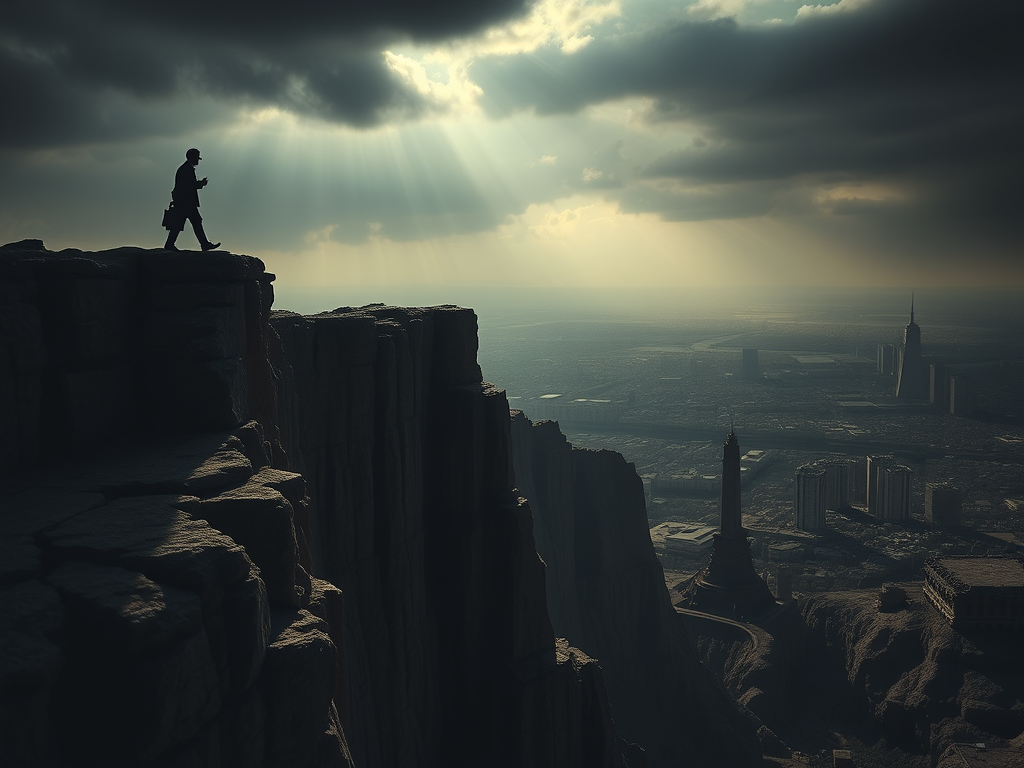
    We stand on the edge of a crumbling cliff, watching the wealthiest among us align with power, building their fortresses as the foundations beneath us weaken. This is not a moment of progress, but one of unraveling—a tide reshaping the current of our lives, dragging us into uncharted waters where the promises of stability and growth dissolve.

    There are moments when this shifting tide manifests physically. I feel it in the sharp constriction of my chest, the breath that never quite expands enough. It comes like a premonition, a familiar weight I’ve known before—as a physician standing in the chaos of an ER, waiting for the storm of trauma to arrive. That same unease grips me now as I witness the waves of disruption—waves set in motion by a leadership that fans the flames of division. The systems we rely on tremble under the weight of this recklessness. Will it result in an implosion of trust? An explosion of conflict? Or both?

    The markets—their endless swirl of numbers and nerves—teeter on his unbridled support of capitalism, a system now unleashed with reckless abandon. There is a potential for an explosion, a surge of short-term gains that rewards the bold and the greedy. Yet beneath the glittering surface, the dark side of this unchecked capitalism festers. Climate damage accelerates, social structures buckle under the strain, and we find ourselves venturing into uncharted territories of destruction—a convergence of AI reshaping labor, technology deepening societal divides, and climate chaos rendering life itself more precarious. As automation and algorithms redefine human relevance, social disorder intensifies, and the natural world grows increasingly hostile, we teeter on the edge of a profound reckoning. The economy hums along, buoyed by greed and the illusion of endless growth. Yet beneath this surface, the cracks widen. AI reshapes industries, automating labor and alienating the workforce. Climate disasters intensify, dismantling the delicate equilibrium of life. The strain builds, and we edge closer to the inflection point. When the plateau is reached, the descent—steep and unavoidable—will follow.

    There will come a moment, an “oh no” moment, when the illusion shatters for the sane among us. When we realize, too late, that we have fouled our own nest. Call it greed, call it hedonism—whatever the name, it is always fleeting. Negative feedback is inevitable, and when it arrives, it is merciless. The Earth, the economy, the social fabric—all stretched to their limits, all demanding repayment for the debts we have long ignored.

    Our lives are shifting, not with the gentle rhythm of nature’s cycles, but with the cataclysmic force of a tectonic rupture. The systems we trusted to hold firm splinter, exposing vulnerabilities once hidden. This rupture leaves us off balance, grasping for stability in a world that feels increasingly fragile. The systems that once demanded respect—our laws, our institutions, our shared norms—are now tools in the hands of those who wield disdain as both weapon and shield. Trump, more symptom than cause, stands as a stark reminder of what we’ve allowed to fester: a collective disregard for the very foundations that uphold us.

    I cannot shake a gnawing trepidation. Yes, the next few years will reshape this country. Many believe this change will be for the better, but I am among the doubters, the skeptics who see the fraying edges of a tapestry once rich with collective purpose. What he represents—what his believers embrace—is a creed of the individual. More for me. More for my family. More power. It is a doctrine of selfishness, cloaked in the language of opportunity.

    And at its core lies the hollow promise of trickle-down economics, a fairy tale told by the wealthy to the hopeful. It whispers that the crumbs will find their way down, but the truth—cold, hard, unrelenting—is that wealth climbs, pools, and calcifies at the top. Those fighting hardest to defend this system will be the first to feel its betrayal, left bewildered as they watch the benefits bypass them entirely. They will fight for a table at a feast that was never meant for them.

    This isn’t governance; it is a new imperialism—self-imposed, insidious, and inexorable. Power, once distributed through the fabric of democracy, is now siphoned away, coalescing into the hands of a few. The people, the very ones who built and sustained this nation, are reduced to instruments—picked up when convenient, discarded when their use expires.

    Meanwhile, technology accelerates, and with it, the disruption of labor, of relevance, of identity itself. Automation replaces hands, algorithms replace minds, and in the process, many are left grappling with a disconcerting question: Who are we when our roles—our work, our contributions, our sense of purpose—are no longer needed? The digital age promises convenience but often delivers alienation, leaving individuals to navigate a world where connection is increasingly mediated by screens and algorithms rather than human touch. As automation hums along and innovation redefines necessity, the gap between the powerful and the powerless widens. In this chasm grows desperation, anger, and confusion. What was once the promise of progress now feels like a specter of exclusion.

    And for what? For power. Not for nurture, not for stewardship, not for the quiet beauty of interconnectedness. Not for love, or gratitude, or the collective flourishing of humanity. Power, it seems, has become its own justification. Consider the actions of corporate giants lobbying to preserve tax loopholes while simultaneously cutting jobs. Or the subterfuge of oil companies, who, despite knowing the catastrophic effects of their actions on the climate, continue to sow doubt and delay meaningful change to protect their profits. Or the politicians who wield gerrymandering as a scalpel, carving up democracy to secure their seats rather than serve their constituents. These examples underscore a simple truth: power is no longer a means to an end but the end itself, pursued at any cost. A hollow prize pursued at the expense of the Earth, its people, and the fragile threads that bind us together.

    This is not a time for idleness or resignation. It is a moment that demands action—to reclaim the narrative of our shared future, to step forward with intention and courage, and to rebuild the values that unite rather than divide us. Our participation is not optional; it is essential. We are participants, whether by choice or by silence. The transformation we face is not just political; it is moral. It demands that we confront the hollowing of our values and resist the currents that seek to sweep us toward division and domination.

    What does resistance look like? Perhaps it begins with a refusal to forget that we are more than individuals. That the dream of democracy—however flawed—was built on the idea of a collective good. We must hold fast to the truth that every action, no matter how small, ripples outward. To nurture the Earth, to cherish community, to see beyond the self—these are acts of preservation, quiet yet profound acts that stand against the tide of greed and division, reaffirming the fragile beauty of interconnectedness.

    This is our reckoning. Will we accept the slow erosion of compassion, or will we choose to protect what remains? Will we let the future be dictated by those who crave control, or will we reclaim the pen to write a new story?

    Perhaps the answer lies not in grandeur but in quiet acts of care—a whisper of hope in a cacophony of greed. To live gently, to resist the pull of selfishness, to honor the interconnected web that sustains us all—this is the quiet revolution. And maybe, just maybe, it is enough to tip the scales.

  • Suffering and Silence: Lessons from Nature

    Suffering and Silence: Lessons from Nature

    There was a time when I believed the right phrase could capture everything—that if I arranged my sentences just so, I might bottle up life’s essence as neatly as a ship in a glass. But meaning, I learned, is no tame bird. It flits beyond the reach of language, and we glimpse it most clearly in moments of heartbreak or awe. Suffering, as the Buddha suggests, isn’t an interruption to life but a crack in our armor through which truth can shine. When our usual defenses crumble, we discover a deeper sense of belonging hidden beneath our frantic attempts to define and control.

    These days, I find a similar revelation in the Earth itself. Take a stroll at dawn—watch how the light dissolves the outlines of trees until the foliage seems to shimmer between shadow and gold. In that silence, you might sense the living web that runs through forest roots and insect wings, through your own chest as your lungs expand. We tend to regard nature as either backdrop or resource, but the reality is more wondrous, and more sobering. We inhabit a tapestry of interdependence so fine that every choice we make vibrates along its threads.

    Our culture, fixated on progress and output, often treats the planet like a canvas to be painted over at will. Yet with every forest lost or species extinguished, we wound the very fabric that sustains us. The seas rise, the skies warm, and we’re left wondering how we forgot that we are part of the same system we’ve imperiled. Like suffering, this ecological crisis bears an urgent message: we are not separate. However much we distance ourselves in thought, reality binds us to the fate of every starfish, every bee, every blade of grass.

    And so we return to that inexpressible thing we sometimes call meaning. It arrives in quiet intimations, in the hush of a morning walk or the hush after a personal loss, reminding us that the world doesn’t need our incessant commentary but our reverent presence. No sermon or blog post can fully articulate that hush, though we try. Instead, what endures is the choice we make to live more gently—to reduce what we take, to protect what remains. Such gestures, small or grand, are how we answer life’s soft entreaty.

    Perhaps that is the best we can do: to embrace the silent interconnectedness that suffering reveals, and to shape our days around cherishing rather than consuming. In tending the Earth, we tend ourselves, and in preserving its fragile wonders, we discover the wordless truth we’ve been yearning for. Even if language fails us, the act of caring endures as a kind of quiet prayer—an acknowledgment that, at the deepest level, we have never really been alone.

  • Climate Deception: The Oligarchs’ Growing Control

    Climate Deception: The Oligarchs’ Growing Control

    The Two-Headed Dragon: Climate Denial and the Rise of Oligarchic Rule

    There’s a certain hush before a thunderstorm—a stillness thick with apprehension, as if the world momentarily holds its breath. We find ourselves in just such a moment now, eyes trained on the looming outlines of a two-headed dragon: the first, a serpent of climate denial, meticulously cultivated by those who preach endless prosperity; the second, a stealthy oligarchy rising from the very soil of our complacence. Together, they represent the undeniable turning point of our age.


    Head One: The False Narrative of Climate Denial

    For decades, oil executives and their political allies have spun comforting parables of perpetual growth. Their fables, not unlike the lullabies that once soothed restless children, promise an easy transition to a greener world—just one more pipeline, one more year, one more compromise. Meanwhile, floodwaters creep into basements and wildfires turn distant skylines the color of scorched ochre.

    So many of us have clung to these stories, believing that slight shifts in lifestyle—reusable grocery bags, fuel-efficient cars—would suffice. It’s hard to let go of any myth that casts us as the heroes of our own salvation. But reality intrudes with the smell of burning brush and the sight of farmland cracked like pottery left too long in a kiln. As these fissures widen, the illusions we’ve bought into begin to crumble.


    Head Two: Oligarchic Rule Amid the Gathering Storm

    In the resulting vacuum, a second head emerges, sharp-toothed and cold-eyed: the oligarchs, those who see opportunity in calamity. While the rest of us stand dumbfounded, gawking at the smoldering ruins of once-thriving towns, these self-styled titans slip laws through Congress and broker deals behind closed doors. They reassure us that security and order require their steady hand—while placing the burden of crisis mitigation on the very people least equipped to bear it.

    One can almost picture them gliding across polished marble floors, drafting legislation that shields their fortunes from mounting climate impacts. They speak gently of “managing risk” and “ensuring resilience,” even as resources funnel upward. Soon enough, taxes rise for wage earners, protest is regulated out of existence, and troops stand ready to silence the discontented. The benevolent mask they wear rests on a shallow foundation, but they trust we won’t notice until it’s too late.


    An Intertwined Crisis

    These twin forces—climate denial and oligarchic rule—are not separate phenomena; they are threads of the same tapestry. The false narrative of infinite growth paved the way for a class of rulers who grow fat on fossil-fueled profits. Corporate half-truths about “clean coal” and “natural gas transitions” soothed us just long enough for power to be concentrated in the hands of the few.

    Meanwhile, each new climate disaster strips away a layer of complacency. Fiery skies over Los Angeles, flooded avenues in Europe, and relentless drought in once-fertile farmland are warnings we can no longer bury under corporate platitudes or political footnotes. As the façade cracks, the oligarchs tighten their grip. To them, chaos is an unspoken currency, fueling the public’s desperation and offering a perfect pretext to solidify control.


    On the Brink of Transformation

    What comes next is the question that haunts us. Will we continue to mumble reassurances that “all is well,” whistling past neighborhoods drowning in storm surge and farmland left barren by unrelenting heat? Or will we confront, at last, the systemic illusions that have brought us here?

    Our denial was comfortable once, as benign as a family portrait hung slightly askew—but now the frame is splintering, the image behind the glass unrecognizable. The illusions of unstoppable economic growth and democratic invincibility were as soothing as a bedtime story, yet the morning light reveals a precarious truth. We stand at the threshold of a season where both our planet and our political system cry out for genuine transformation.

    Should we fail to respond, the two-headed dragon will not merely loom overhead—it will walk among us, reshaping our lives in ways we can scarcely imagine. But if we seize this moment, if we rend the veil of climate denial and reclaim power from those who would hoard it, we might yet find a path to a future that honors both the fragility of our planet and the ideals of a truly representative society. In this space between thunder and storm, we still have a choice. We can open our eyes, relinquish the fairy tales, and become the authors of a different ending—one that salvages hope from the embers, even as the clouds gather on the horizon.

  • From Flames to Fallout: The Impact of Wildfires on Climate Awareness

    From Flames to Fallout: The Impact of Wildfires on Climate Awareness

    Ashes and Echoes

    A curtain of smoke hangs over sixty square miles of scorched California soil, drifting upward with an almost fragile grace before the stench reminds us of its true nature: charred wood, twisted steel, and the bitter residue of dreams left to burn. Overhead, news helicopters hover like curious buzzards, capturing images that flood every screen—TV, social media, cell phone alerts—on a relentless 24-hour loop.

    The First Wave: Shock

    By midday, headlines scream about apocalypse unleashed—glossy mansions and mom-and-pop shops alike turned to rubble in a matter of hours. Experts take their places on panel discussions, brandishing bullet-point theories: insufficient rainfall, misguided regulations, poor land management. They’ll note in passing the record-breaking drought or rising temperatures, but the anchor quickly pivots to a fresh angle, another hot take, maybe a speculation about who profits most from this disaster.

    Even so, climate change threads faintly through the coverage, often relegated to a line or two. We see it in the background of those billowing clouds, but it never quite stands center stage.

    The Second Wave: Blame and Bickering

    Though the flames may subside, the fires of accusation surge across networks and social media. Politicians and pundits can’t resist fanning those sparks—there’s too much capital in selling easy fixes. “They should’ve cleared more brush!” yells one. “They never should have built homes here!” counters another. Online, a dozen conspiracy theories ignite at once, feeding on the public’s hunger for answers or outrage—preferably both.

    And there we sit, transfixed by the spectacle—like onlookers gawking at a roadside crash—scrolling through updates, retweeting headlines, letting talking points shape our beliefs. The fireline shifts, but the conversation remains circular.

    Unseen: The Leviathan in the Smoke

    Just beyond the torrent of sensational news, a colossal presence looms: climate change, no longer a future warning but a beast that feasts on our carbon-rich lifestyles. It’s fueling the droughts that turn brush into tinder and the gusty winds that scatter sparks across parched hillsides. Yet who wants to wrestle a leviathan when smaller battles—blaming regulations, logging companies, or political rivals—offer quicker headlines and simpler narratives?

    We’ve become so adept at looking away. Growth and profit remain unchallenged gods of our modern pantheon. And those with political clout or economic power rarely look the beast in the eye; it’s easier to promise short-term relief than risk speaking hard truths that might curb business as usual.

    Aftermath: Ash Sifting and Airwaves

    When the smoke lifts, the world goes silent where vibrant neighborhoods once stood. Survivors search through ash, hoping to find a photograph or a charm bracelet that might have survived the heat. Across the nation, meanwhile, broadcasters and bloggers spin out theories and scapegoats. Then comes the next sensational headline—another scandal, another crisis—and the wildfire story recedes from the spotlight.

    Meanwhile, in break rooms and coffee shops, we debate “the problem” in fragments: “It’s the power company’s fault,” someone says. “No, it’s poor zoning,” another pipes up. Perhaps the phrase “global warming” flits by, but it rarely lingers. After all, pointing fingers is more comfortable than a frank admission that our way of life, and the carbon-intensive economy that props it up, may be the biggest spark of all.

    A Chorus of Dissonance

    And so we’re left beneath a dense fog of half-truths. We know these megafires are no coincidence, but we hesitate to connect them to our dependence on fossil fuels, our relentless consumption, our policies built around perpetual growth. Politicians keep pivoting to jobs and industries, because that’s an easier sell. Indeed, we’re told innovation will solve this—eventually—just not if it means slowing down the juggernaut of “progress.”

    We live, then, in a looming dread that trails us year to year, like a shadow that refuses to shrink. We see fires rage across the West, we watch storms flood our coastlines, but do we recognize them as dispatches from the same war we’re failing to fight? Or do we label them “acts of God” or “flukes,” and move on?

    Truth in the Ashes

    Rebuilding after tragedy is something we humans do well—we’ve done it for millennia. The real question is whether we’ll finally acknowledge the enormous predator at the center of the smoke. For if we continue to treat each inferno as a freak event, or just another headline in an endless 24/7 cycle, we’ll keep ignoring the most pressing story of our lives: a planet growing hotter, year by year, under our own influence.

    Because if there’s anything the scorched earth is trying to tell us, it’s that ignoring climate change won’t extinguish it. So let the next wave of news, the next political debate, the next conversation at your dinner table, call the leviathan by its name. Only then might we begin to tame it—or at least learn to live in a world that’s no longer quite so flammable.


    Author’s Note:
    This is more than California’s tragedy. It’s a stark page in the story of a civilization at odds with its own habitat. We may spin our narratives however we please—be they conspiracies, blame games, or political showdowns—but behind the smoke rises the same inescapable truth: Our climate is changing, and we can’t keep burning through our resources—or our illusions—without consequence.

  • Awakening From Blindness: America’s Environmental Reckoning

    Awakening From Blindness: America’s Environmental Reckoning

    The Quiet Rumbling of an American Illusion

    There is a strange hush in the suburbs at dawn, when the vinyl siding of the houses and the dappled leaves of the oaks both seem suspended in a kind of pale, unquestioning expectation. Only the faint hum of distant air conditioners disturbs the stillness—cooling living rooms even as the wider world simmers under rising temperatures. This hush, this gentle ignorance, cradles a lie repeated so often that it has slipped into the bloodstream of the American psyche.

    A man standing on his porch in early morning can feel something like pride stirring in his chest—pride in the trim of his hedges, in the car glimmering in the driveway, and in a promise once cast by a charismatic leader to “make America great again.” He might cling to that notion as though it were the top headline pinned to his phone’s screen, a reminder that some grand revival lies just around the corner. Perhaps he yearns for a return to an era of steel mills and muscle, the heartland churning out product upon product, recapturing a time that stands hazily in the national memory—yet never existed quite as fondly as he believes.

    Meanwhile, on the other side of those hedges, the cracks are starting to show—cracks in the sidewalks, in the middle-class dreams, in the polarized hearts of neighbors who politely wave yet keep their blinds drawn. And looming behind the patter of suburban sprinklers, climate change rumbles like a distant freight train. For all the talk of “bigness”—bigger houses, bigger industries, bigger everything—there remains a fragile ecosystem battered by storms and drought, a rattled conscience tugging at the edge of our thoughts.


    Our Collective Amnesia

    It is as though we inhabit a dream spun by advertisers and politicians alike, where growth is nothing but good. To suggest otherwise—to hint that we cannot keep scorching the sky and exhausting the earth—risks being branded unpatriotic, or simply dismissed with a patronizing smile. This is how a lie cements itself: the more it’s repeated, the more it worms its way through the delicate weave of public opinion, turning thoughtful inquiry into a kind of social heresy.

    In some unwritten covenant, much of America nods along. Our forebears once believed that westward expansion was ordained by Providence—a destiny manifest. Today, that same restless spirit lingers in the slogans and rallies urging us to drop our guard, multiply our industries, and pursue a hazy notion of “greatness.” Yet behind these glib assurances, reality smolders—like forests in August or coastal towns battered by storm surges.


    Echoes of Our Past

    America’s capacity for denial has a long, if tragic, pedigree. Entire epochs rose on the back of moral compromise: the displacement and decimation of Native tribes, the enslavement of African peoples whose labor built industries, the mythic glow of post-war prosperity that papered over communities quietly left behind. Even the manicured lawns of today owe themselves, at least partly, to legacies of exploitation and selective forgetting.

    Now, the denial takes the form of diminishing science while exalting the dream of endless affluence. Men and women who yearn for a simpler past find comfort in rally cries, never mind the rising seas or creeping wildfires that flicker across the evening news. Perhaps it feels safer to trust in cherished myths of inexhaustible progress and mastery than to face the fact that the planet itself is turning inhospitable to our stubborn habits.


    The Sleepwalk into Futility

    What unsettles the most is not merely the defiance of climate deniers but the quiet acquiescence of those who know something is amiss yet press on as though nothing can—or should—be done. Shiny new developments promise endless expansion; political harangues reduce environmental crises to bickering points. Those with means retreat into enclaves that brace for the future, while the vulnerable among us—the ones least able to pack up and move—shoulder the brunt of storms, floods, and drought. Their voices, though urgent, often dissolve beneath the roar of willful ignorance.

    Here, we encounter a moral crisis as well: a slow erosion of empathy under the weight of unbridled self-interest, a surrender of conscience to the momentum of “progress.” One almost pities those seduced by lofty campaign slogans—assured of new jobs, revived industries—only to be discarded when factories stay shuttered and storms continue their devastating march. Those shielded by wealth will endure, building walls and gathering resources, while the rest, deemed expendable, watch as their fields wither to dust in their hands.


    Awakening from the Dream

    And yet, like dawn creeping over the neat lines of suburbia, there remains a chance—fragile but real—for awakening. Each new day invites us to recognize that our planet is singular, and no amount of posturing can conjure limitless resources or infinite resilience. True “greatness” springs not from moral negligence but from the capacity to see beyond our fences—literal and figurative—and accept that, in chasing prosperity, we have sown the seeds of our undoing.

    Crisis can be fertile ground for transformation. Perhaps the tipping point will come when too many storms and wildfires land on too many doorsteps to be brushed aside as political talking points. Or when insurance rates skyrocket, leaving once-confident homeowners on their porches, scrolling through alerts on their phones, feeling the future tilt beneath them like a deck listing in rough seas. Maybe change will start with those who sense a burden on their conscience, deciding that to ignore reality for comfort is the surest way to lose both.


    A Faint Glimmer of Hope

    Despite the looming catastrophe, it remains within our power to choose differently—to ease our grip on endless expansion, to place stewardship and empathy before boastful denial. It may not spark the same fervor as calls for bigness, but it rests on the simple conviction that greatness anchored in truth and compassion is more enduring than any hollow slogan.

    And if the hush of an American dawn teaches us anything, it is that lies—no matter how loudly repeated—cannot hold back the day. Our capacity for real progress hinges on our courage to see through the illusions and confront the growing storms with honesty and care for one another.


    Author’s Note:
    We live in a time of dizzying promise and great peril, where blind patriotism and consumer ambition often distract us from our collective obligation to the planet. May we remember that true greatness, if it exists, flows not from disregard or conquest, but from humility, empathy, and the moral resolve to meet our challenges head-on.

  • Facing the Costs of Endless Growth: A Climate Perspective

    Facing the Costs of Endless Growth: A Climate Perspective

    The Mirage of Infinite Growth

    There comes a moment in every great story when the truth becomes too stark to ignore—when rising waters or scorching fires force our eyes open. Today, that story is ours. Climate change, once dismissed as an abstract theory, has become an unrelenting tempest shaking the foundations of our civilization.

    And yet there are those who insist that unbridled growth is the only path forward: growth of our GDP, our industries, our subdivisions, and our debt. Politicians promise expansion while trillion-dollar deficits loom like thunderheads, casting long shadows over our collective future. Fossil fuel companies quietly fan the flames of denial, too invested in profit to pull back. High above the city streets, in boardrooms of glass and steel, the ultra-wealthy watch the world unfold below, spinning visions of relentless production and consumption—a merry-go-round they cannot afford to stop.


    A Collision of Realities

    The rhetoric of constant growth can sound seductive—optimistic, even. As the nation’s debt climbs toward unfathomable sums, politicians reflexively declare that we must “grow our way out of” the crisis. We rev the economic engine, ignoring planetary limits, hoping that with enough thrust we can outrun the consequences of spiking CO₂ levels, melting glaciers, and battered coastlines.

    But climate change does not negotiate. It bows to no corporate lobby or economic theory. It drowns farmland under floodwaters, ravages communities with monstrous storms, and bakes entire forests to the brink of spontaneous combustion. Regardless of press releases or feel-good talking points, these disasters erode the myth that we can grow forever without consequence.


    The High Price of Denial

    In California, massive wildfires sweep through neighborhoods, leaving scorched ruins and ghostly silhouettes of what once were homes. Along the Atlantic and Gulf coasts, hurricanes roar inland, reducing entire towns to rubble. Each time, some residents rebuild—only to be struck again. Insurance companies pull out, leaving communities naked to the whims of nature. Skyrocketing premiums and canceled coverage reflect a simple truth: when denial meets reality, reality wins every time.

    Still, those deeply invested in the status quo—politicians, corporations, billionaires—guard the narrative that more is always better. Pulling back the curtain of ignorance would threaten the security and comfort they’ve built around themselves. Instead, they deny and deflect, breeding conspiracy theories and false debates. But truth has a way of seeping through the cracks, like floodwaters breaching weak levees.


    Two Sides, One Truth

    When faced with two starkly opposing viewpoints—one insisting the Earth can endure boundless consumption, the other sounding alarms over irreversible damage—both cannot be correct. Facts do not bow to public opinion. Science does not conform to profit margins. If we remain on this collision course—driven by economic growth-at-all-costs and ignoring the planet’s finite boundaries—one side of the argument will collapse under the weight of accumulating evidence. That evidence, from triple-digit heatwaves to catastrophic floods, is mounting every day.


    A Future at the Crossroads

    So, what does the future hold for a nation compelled to spin its economic wheels faster and faster to service mounting debts? Will we continue to pay interest not just with money, but with our environment, our communities, and our children’s inheritance?

    Behind the scenes, the world’s wealthiest individuals comprehend the unfolding crisis. Many have erected walls—both literal and figurative—to shelter themselves from the devastation they’ve helped accelerate. Yet nature respects no boundary. Fires, floods, and storms do not discriminate between those of modest means and those whose fortunes tower behind gilded gates.

    Our shared hope lies in recognizing these illusions for what they are. We must adopt models that prize sustainability and resilience over ceaseless, unexamined expansion. We must reject the mirage that wealth and power alone can neutralize every threat—because the flames will keep spreading, the oceans will keep rising, and the storms will keep intensifying, regardless of any attempt to outrun them.


    Embracing the Inevitable

    Ultimately, truth stands in unrelenting light. It reveals the hidden toll of reckless growth, demanding we confront the problems we’ve long postponed. Step by step, our choices must align with the undeniable reality that Earth is a closed ecosystem—its resources finite, its boundaries inflexible. Every day we delay, the cost grows steeper: financially, ecologically, and morally.

    In the end, there is only one truth, and ignoring it offers no reprieve. The Earth, in its unwavering orbit, continues its own narrative—whether we are paying attention or not. For those who choose to live on the side of reality, the message is simple: we can embrace a new path that honors our planet’s boundaries, or we can allow ourselves to be overtaken by the next wave of catastrophes.


    Author’s Note:
    The lines could not be clearer. Climate change is real, utterly indifferent to political factions or economic ideals. It is the height of irony for a society to tout prosperity even as we race headlong toward disaster. But we have the power to change course: to adapt, innovate, and shift toward a future that does not demand we sacrifice our planet on the altar of infinite growth. The choice, as always, remains ours.